Who does the work
About Our Roof and Gutter Cleaning Company
Roof Gutter Cleaning Melbourne is a gutter cleaning company that works on homes, strata schemes and commercial buildings across the city. We keep to a narrow trade on purpose: gutters, downpipes, roofs, moss and roof cavities, cleaned properly and proven with photos, and nothing we'd have to learn on your roof. This page explains how we work, what our crews carry, what paperwork we hold and what we won't do. If you arrived here first, our Melbourne roof and gutter cleaning overview shows every service in one place.
- Homes, strata and commercial
- Insured, ABN registered
- Photos after every job
Who we are
What kind of gutter cleaning company are we?
A specialist one. As a roof and gutter cleaning company, we clean gutters, valleys, downpipes, roofs and roof spaces for Melbourne homeowners, owners corporations and building managers. We don't repair, paint or restore roofs, which means our advice about your roof isn't shaped by work we'd like to sell you next.
We work across all of metropolitan Melbourne, from the tall gums of the outer east to the parapet box gutters of the inner city, and on everything from a single storey unit to a school campus. The same crews and the same standards apply whether the job is one house or a whole strata complex.
The people
Who are the crews, and what training do they have?
The work is done by our own crews, trained to plan and carry out work at height and to handle the vacuum systems, poles and roof access equipment we use. On commercial and strata sites, crews complete the site's own induction and can supply police check details on request.
Working at height is the biggest risk in this trade, so it's where training starts. Crews learn to set up ladders properly, use roof anchors and harnesses, recognise fragile roofs and skylights, and choose the safest way to reach each gutter, which is usually from the ground with a pole.
They are also trained to spot and photograph defects: rust, loose brackets, cracked tiles, failing mortar and blocked underground pipes. That is what turns a clean into a useful report.
On a typical house, a crew of one or two people does the job. Larger homes, strata schemes and commercial sites get bigger crews, and every job has one person responsible for safety, quality and the report.
You won't meet a salesperson. The person who looks at your roof on aerial imagery and writes your quote works in the same team as the crew who turns up, so what's promised and what's delivered match.
The kit
What equipment do we bring?
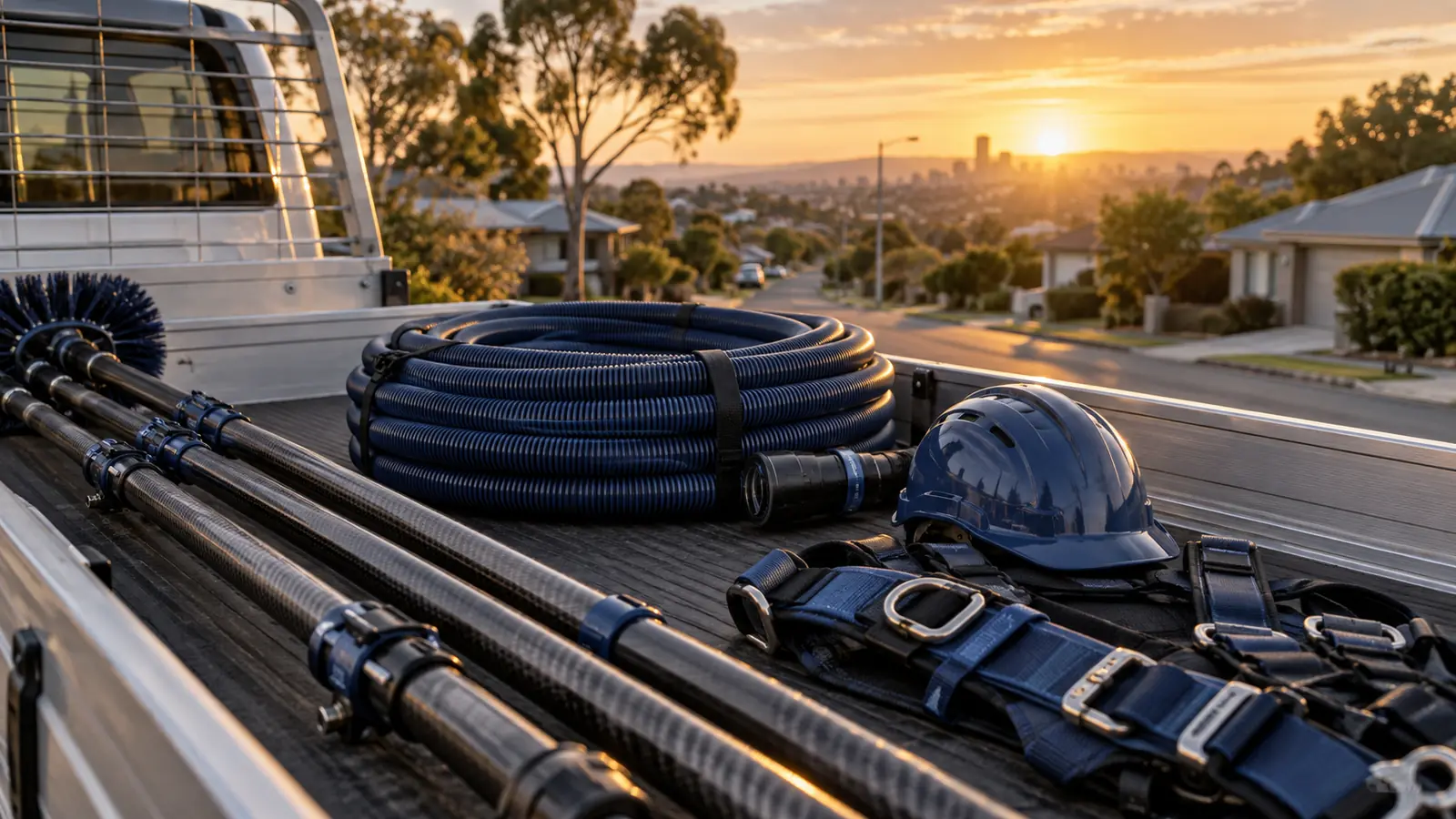
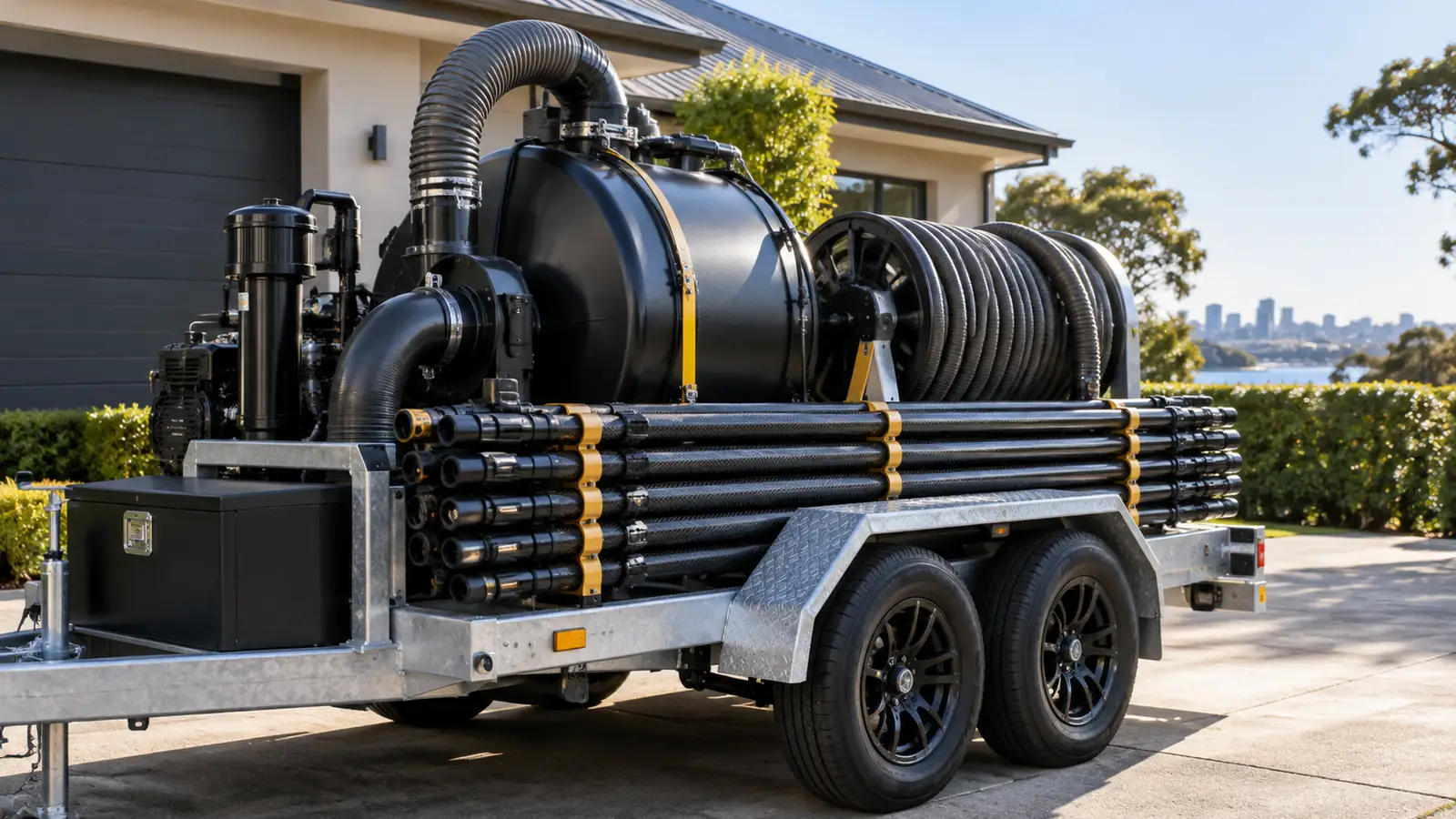
Industrial wet and dry vacuums with carbon-fibre poles do most gutter work from the ground. Roof anchors, harnesses and ladders cover the rest. Soft wash sprayers and low-pressure equipment handle roofs, and HEPA-filtered vacuums are used inside roof cavities. Every crew carries a camera for the report.
- 1Gutter vacuum and poles. Lifts wet and dry debris into sealed bags, often without anyone on the roof.
- 2Pole camera. Lets the crew check the inside of gutters that can't be seen from the ground.
- 3Height safety gear. Anchors, harnesses, lanyards and heavy-duty industrial ladders.
- 4Roof washing equipment. Soft wash sprayers and low-pressure units, with controlled pressure only where a roof suits it.
- 5HEPA cavity vacuums. For dust and droppings inside roof spaces.
Paperwork
What insurance and safety paperwork do we hold?
We hold public liability insurance and supply the certificate on request, and the business is ABN registered. For commercial and strata sites, a site-specific safe work method statement is prepared for the height work before the first visit, as WorkSafe Victoria requires for this kind of job.
| Document | What it covers | Who gets it |
|---|---|---|
| Public liability certificate | Damage or injury to third parties during the work | Anyone who asks; sent automatically to strata and commercial clients |
| Safe work method statement | How height work is planned and controlled on the site | Commercial and strata sites before the first visit |
| Quote and scope | What's included, the method and the fixed price | Every client, before booking |
| Photo report | Before and after photos, defects found | Every client, after the job |
WorkSafe Victoria's guidance on safe work method statements explains when one is legally required, which covers most roof work above two metres. If you're cleaning your own gutters instead, our guide on DIY gutter cleaning and when to stop covers the same safety thinking for homeowners.
Our standard
Why do we photograph every job?
Because gutter cleaning is almost impossible to check from the ground. Matching shots of every run, one as found and one once cleared, show exactly what was there and what's left. It keeps us honest, and it gives you a dated record for tenants, insurers, buyers and committees.
The trade has a reputation problem. Plenty of people have paid for a gutter clean and later found leaves still sitting at the back of the house, or silt left in the outlets. Photos end that argument before it starts, and they cost us very little to take.
They also make us better at the job. A crew that knows every run will be photographed doesn't skip the awkward bit behind the pergola. And defects found along the way get recorded with a location, which is far more useful to you and your roof plumber than a comment on the way out.
Where we draw the line
What won't we do?
We won't repair or restore roofs, replace gutters, do plumbing, remove animals, handle asbestos or sell you a service your roof doesn't need. When a job belongs to another trade, we photograph the problem, tell you which trade to call and leave the choice of who to hire with you.
That list exists for two reasons. The first is skill: a roof plumber, slater, electrician or licensed asbestos assessor has training and licences we don't, and your roof deserves the right person. The second is trust. A cleaner who also sells restoration has a reason to find problems; one who doesn't can simply tell you what they saw.
We also turn down some cleaning work. A tile roof close to replacement may not be worth washing, slate with widespread damage shouldn't be touched until a slater has been, and a sale-week clean that would only hide a failing roof isn't something we'll quote. You'll hear why, in writing, if that's our answer.
Where we work
Which parts of Melbourne do we cover?
All of metropolitan Melbourne, from the eastern and south-eastern suburbs to the west, the north, Bayside and the inner city. Each region brings its own trees, roof types and access quirks, and crews plan around them, from plane-tree streets in the inner north to salt air along the bay.
Jobs are grouped by area on each day, which keeps travel down and makes it easier to offer a date that suits you. Strata and commercial programs are scheduled well ahead so they fit around residents, tenants and trading hours, and homes are fitted in around them. In the busy weeks before summer and after the autumn leaf drop, booking a little ahead is the best way to get the day you want.
How do I get a quote from us?
Fill in the quote form with the address, the property type and the jobs you have in mind. Roof size and access are worked out remotely before a written, fixed price comes back to you. Commercial and strata clients can also ask for our insurance certificate with the quote.
About us
What do people ask about us?
Before booking, people mostly want to know three things about who will be on their roof: whether we're insured for height work, whether the crews are trained, and whether we send someone else to do the job.