
Footscray to Werribee and Melton
Roof and Gutter Cleaning in the Western Suburbs
Gutter cleaning in Melbourne's western suburbs is less about leaves than anywhere else in the city. Wind off the open plains pushes dust, grit and litter into gutters, huge growth-corridor estates pack two storey homes onto small lots, and older industrial areas around Maidstone, Braybrook and Sunshine carry long box gutters on commercial roofs. This page covers what fills western gutters, what people here book and how access works. It is one of six regions listed on our page of Melbourne areas we cover.
- Dust, grit and windblown litter
- Two storey estate homes
- Commercial box gutters
The region
How is gutter cleaning in the western suburbs different?
Gutter cleaning in the western suburbs deals more with grit, dust and wind than with heavy leaf fall. Estate homes on Colorbond roofs collect fine sediment that turns to sludge, older inner-west homes have terracotta and a few big street trees, and industrial roofs need box gutter work under a safety plan.
Inner west
Footscray, Seddon, Yarraville, Kingsville
Weatherboard and brick cottages from the late 1800s to the 1930s, many with terracotta or old corrugated iron. Some streets have big plane trees and peppercorns, and lanes at the back are narrow.
Middle west
Sunshine, Braybrook, Maidstone, Avondale Heights, St Albans
Post-war homes, newer townhouse infill and the industrial fringe. Factory and warehouse roofs sit alongside houses, and the Maribyrnong corridor brings river red gums close to some streets.
Growth corridor
Point Cook, Tarneit, Truganina, Werribee, Melton
Large estates of double storey Colorbond homes on small lots, young street trees and open land nearby. Wind and building dust are the main sources of gutter debris.
| Area | Typical roofs | What fills the gutters | Usual cleans a year |
|---|---|---|---|
| Inner west | Terracotta, corrugated iron | Plane and peppercorn leaves, city grit | One |
| Middle west | Tile houses, industrial metal roofs | Dust, litter, river red gum leaves | One for homes, two for industrial sites |
| Growth corridor | Colorbond, double storey | Wind-carried dust and sediment | One, sometimes less on newer streets |

Wind, dust and seasons
What fills western gutters, and when?
Mostly what the wind brings. The west is flatter, more open and usually drier than the east, and strong westerly and northerly winds carry soil, sand and litter across the plains. That material settles on low-pitched metal roofs and washes into gutters as heavy grey sediment.
- Summer and autumn winds bring the most dust, especially near open paddocks and building sites on the fringe.
- Autumn leaves matter mainly in the inner west and near the Maribyrnong and Kororoit Creek corridors.
- Grassfire season on the western plains makes a pre-summer clear sensible for homes backing onto open land.
Because the west gets fewer big leaf drops, many owners here assume their gutters are fine. The sediment is harder to spot from the ground than a pile of leaves, but it holds water just as well, and a gutter half full of grey sludge overflows in the first heavy storm.
Grass and bushfire risk isn't only a hills problem. Estates on the edge of the western plains back onto grassland, and the CFA includes clearing gutters among the early-spring jobs in its guide to getting ready for fire season. Dry grass seed and litter lodged in a gutter burn as easily as leaves, so homes on the estate edges are worth checking before the first hot northerly.
What people book
Which services do western suburbs properties book most?
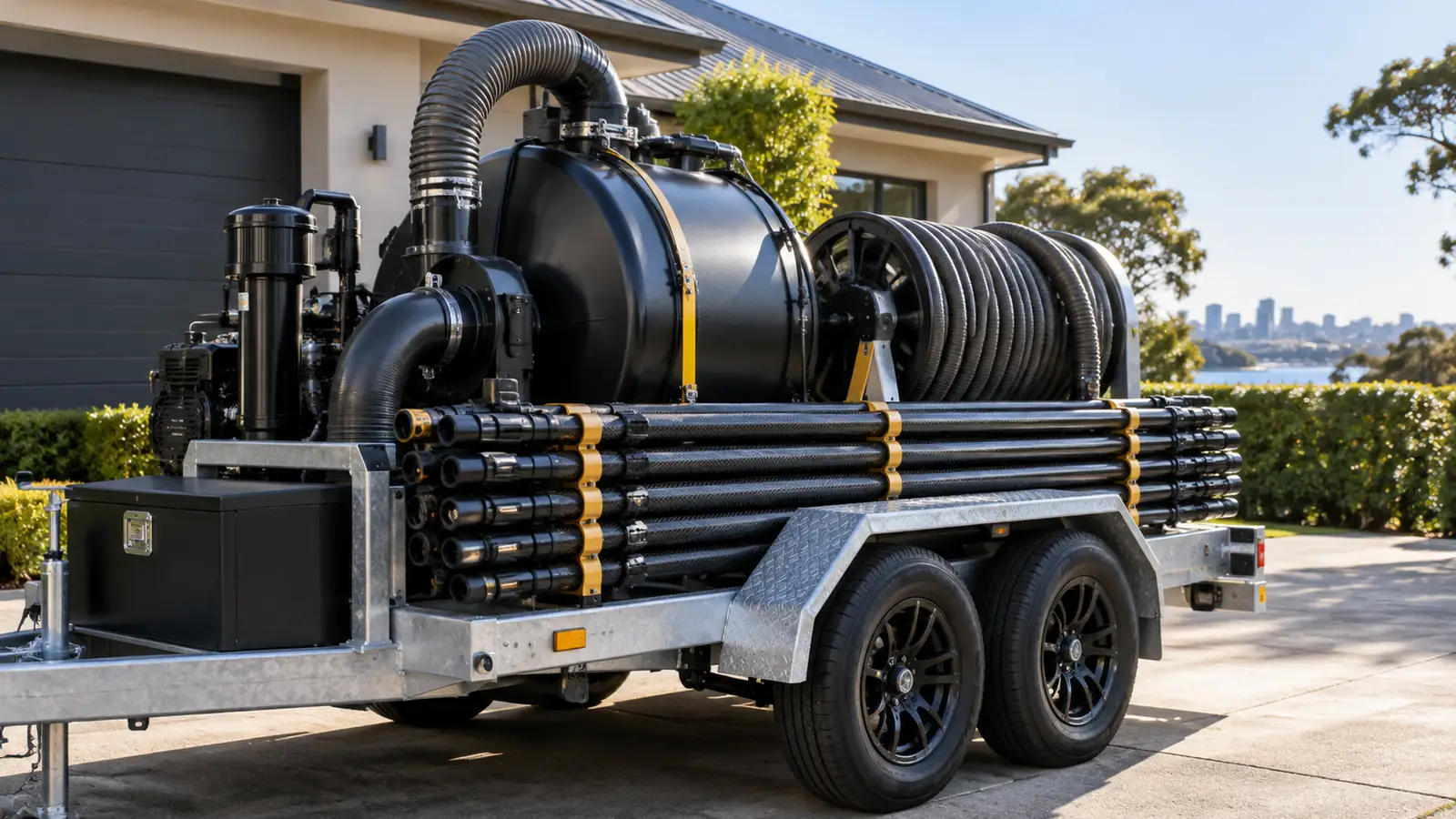
Two storey home gutter cleans top the list, followed by commercial box gutter programs on the industrial fringe and downpipe flushes where sediment has set in the bottom bend. The vacuum method suits the west particularly well, because heavy wet grit is hard to scoop.
Two storey estate homes
Upper gutters reached with long poles from front and back yards, because side paths are too narrow for ladders.
Why we use vacuum polesFactory and warehouse roofs
Box gutters, sumps and overflows around Maidstone, Braybrook, Sunshine and Laverton, with SWMS and reports.
Commercial box gutter workSilted downpipes
Grit settles in the bends and boot, then hardens. We free it from the top and run water through until it reaches the pit.
Unblocking downpipesWhat we find
What faults show up on western roofs?
On estate homes, the common findings are gutters with too little fall, downpipes set hard with sediment and wind-lifted flashings. On older inner-west cottages, it's rusted iron and tired box gutters. On industrial roofs, blocked sumps, sealed overflows and ponding in long box gutters top the list.
Estate homes. Low-pitched Colorbond roofs on new homes are generally sound, but the gutters themselves are sometimes fitted with very little fall, so water and sediment sit in the middle of the run. Photos of pooling water in a freshly cleaned gutter are useful if the home is still under the builder's warranty.
Inner-west cottages. Old corrugated iron and galvanised gutters on Victorian and Edwardian cottages rust from the inside where wet grit sits. Rust holes and weak joints are photographed and located so a roof plumber can quote the repair.
Industrial roofs. Long box gutters on warehouses collect a shallow layer of sludge along their whole length, and sump guards clog with plastic and packaging blown in from yards and roads. Overflows are sometimes found sealed or painted over after past repairs, which is the most urgent fault we report.
Everywhere in the west. Strong winds loosen flashings, ridge caps and gutter brackets over time. We note anything that looks loose so it can be fixed before the next big blow.
On the ground
How do access and weather affect jobs in the west?
Small lots and wind are the two big factors. Estate homes often have less than a metre between the wall and the fence, so ladders don't fit, and strong wind makes pole work and roof access unsafe. We plan around both, often starting early before the afternoon wind picks up.
On the growth-corridor estates, the usual approach is to work the upper gutters from the front yard and the back yard with long poles, and leave the narrow side paths for the lower roofs. Low-pitched Colorbond roofs are walkable along the fixing lines where the poles can't reach, but only on calm days.
Wind is the most common reason a western job moves. Gusty northerlies in summer and strong westerlies in winter can make height work unsafe, and a pole at full length acts like a sail. If the forecast turns, the job is rescheduled and the quoted price stays the same.
Inner-west cottages have their own quirks: rear lanes too narrow for a vehicle, verandah roofs over the front, and old iron roofs that need gentle footing. We plan those jobs with smaller gear and more time.
Two storey homes on corner lots and battle-axe blocks are often easier than they look, because there's open ground on at least two sides for the poles. Townhouse rows with shared walls are harder, and are planned like strata jobs.
Commercial sites around Maidstone, Avondale Heights and Braybrook usually want work done before trading or on weekends. Site inductions, SWMS and insurance certificates are sorted before the first visit, as they would be anywhere else.
How do I get a quote in the western suburbs?
Give us the address, whether it's a home or a commercial site, and how much room there is beside the house. Homes are priced from aerial imagery; factories and warehouses may need roof photos or a quick site look. Either way, you receive one written price before anything is booked.
Curious about how the numbers work? See what moves a gutter cleaning price, or go back to the Roof Gutter Cleaning Melbourne home page.
Western suburbs questions
What do western suburbs owners ask?
Owners out west usually want to know whether we reach the far growth areas, how soon we can come, and whether we understand what the local trees and the wind do to their gutters. Our answers are below.