
How prices are set
Gutter and Roof Cleaning Costs in Melbourne
What gutter cleaning costs in Melbourne depends on the building in front of us, so every job gets a fixed written quote rather than a price off a list. This page shows exactly how that quote is built: what each kind of home and roof costs relative to the others, what's always included, what pushes a price up or down, and how to compare quotes without getting caught by the cheapest one. It covers houses, roofs, roof cavities, strata schemes and commercial buildings. If you'd rather see what we actually do first, head to our Melbourne roof and gutter cleaning homepage.
- Fixed price in writing
- Measured from aerial imagery
- Debris removal always included

The short answer
What does gutter cleaning cost in Melbourne?
Gutter cleaning cost in Melbourne comes down to four things: storeys, metres of gutter, the debris load and access around the house. A small single storey home sits at the bottom of the range, a large double storey home under gums at the top. You get one fixed figure before booking.
There's no flat rate here, because one number can't be fair to every house. Charge a cottage owner the same as a family with a two storey home, three valleys and a gum over the back, and one of them is paying for the other. Instead, this page shows how the number is built, so your quote makes sense when it arrives.
Every quote starts the same way. We look at the property on aerial imagery and street view, measure the gutter length and roof area, count the storeys and valleys, and note trees, pools, glass roofs and anything else that affects access. Your notes and photos fill the gaps. The result is a written price that covers the whole job as described.
- Always includedEvery gutter, valley and outlet, downpipe tops flushed, debris bagged and removed, clean-up below, before and after photos.
- Priced separatelyRoof washing, moss treatment, roof cavity cleaning and gutter guards, each shown as its own line.
- Never includedRepairs of any kind, restoration, painting, plumbing below ground and pest control.
Behind the number
How do we measure a roof without visiting?
From high-resolution aerial imagery and street view. The roof outline gives the metres of gutter and the roof area, valleys and hips show up clearly from above, and street view shows the number of storeys, the roof material and what sits below the gutters. Your photos fill in anything the imagery can't show.
For most Melbourne houses that is enough for a firm price. The imagery tells us how long each gutter run is, where the downpipes sit, how many valleys the roof has and how much tree canopy hangs over it. Street view adds the height, the material and the access: a pool along one side, a carport at the front, a neighbour's fence tight against the wall.
Where imagery can't answer a question, we ask. The usual ones are when the gutters were last cleaned, whether there are guards on, whether any downpipes feed a tank, and whether pets will be in the yard. A couple of photos from the backyard, where street view can't see, often settle the rest.
Occasionally a site does need a look in person, such as a large strata complex, a commercial roof with hidden box gutters, or a house whose back half isn't visible from the air because of trees. In those cases we say so up front and book a short visit.
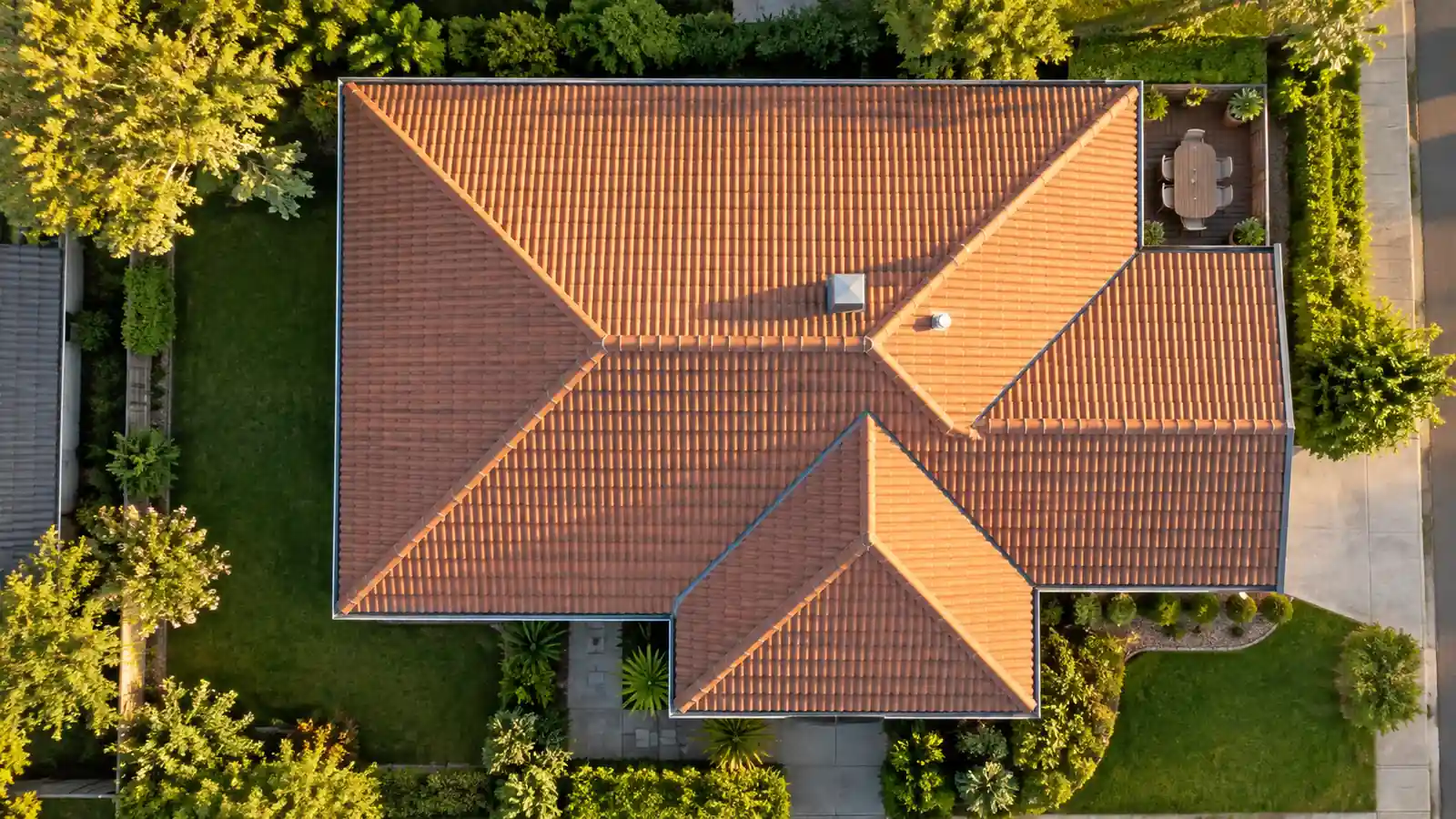
Homes
How are prices worked out for single and double storey homes?
Storeys set the starting point, then gutter length and debris load move it. A single storey house with open access is the lowest band; a double storey home, or one with lots of valleys and trees, moves up; three storey townhouses and difficult blocks sit at the top.
| Home | Typical situation | What adds time | Price band |
|---|---|---|---|
| Small single storey | Unit, cottage or small brick veneer, simple roof | Little beyond outlets | Lowest |
| Larger single storey | Family home with a hip roof and one or two valleys | Valleys, overhanging trees | Lower middle |
| Double storey | Two storey home with lower roofs below the upper gutter | Height, lower roofs, sloping ground | Upper middle |
| Three storey or difficult | Townhouse, split level on a slope, heavy tree cover | Roof access, tight side paths | Highest |
Units and apartments are a special case. If your home is part of a strata scheme, the gutters may be common property looked after by the owners corporation, in which case the scheme arranges and pays for the clean. It is worth checking with your strata manager before booking your own.
Gutters that haven't been cleaned for several years usually take longer than the band suggests, because silt has packed hard and plants may be growing in them. Tell us when they were last done and the quote will account for it, rather than surprising you on the day.
Roofs
How is roof cleaning priced by material?
Roof cleaning is priced on roof area first, then adjusted for the material, pitch, storeys and how much growth there is. Metal roofs are usually quickest, concrete tiles sit in the middle, and terracotta and slate take longest because they're handled more gently from access equipment.
| Roof | Method | Why it costs what it does | Price band |
|---|---|---|---|
| Colorbond and metal | Gentle rinse and soft brush | Smooth surface, safe footing along fixings | Lowest |
| Concrete tile | Soft wash or controlled pressure | Porous surface, more growth, careful footing | Lower middle |
| Terracotta | Soft wash, low-pressure rinse | Brittle tiles, minimal walking, slower work | Upper middle |
| Slate | Soft wash from ladders or a lift | No walking at all, access equipment needed | Highest |
Clearing the gutters after the roof is washed is built into that figure. For how each material is actually cleaned, and why pressure isn't always the answer, see our page on roof cleaning in Melbourne by material.
Roof spaces
What does roof cavity cleaning cost?
Roof cavity cleaning is priced per roof space. Ceiling area, headroom, the size and position of the manhole, and how much droppings and nesting need removing set the figure. A small, dusty cavity with an easy hatch costs least; a large, low roof with heavy rodent or possum mess costs most.
Headroom makes a bigger difference than people expect. A steep roof lets the crew stoop and work quickly; a low-pitched one means crawling across joists, which is slower and harder. Access matters too: a hatch in a hallway is quicker to work through than a small manhole inside a wardrobe.
A phone photo taken through the manhole with a torch is the fastest way to a firm quote. The roof cavity cleaning page explains what's removed and what's referred to other trades.
Larger sites
How are commercial and strata jobs priced?
Commercial buildings and strata schemes are quoted per site. Roof area, the number of buildings, box gutters and sumps, how the roof is reached and when the work can happen all feed in. Programs are priced per visit, agreed once, and the same figure applies each time the crew returns.
| Factor | Commercial buildings | Strata schemes |
|---|---|---|
| Size | Roof area, number of box gutters and sumps | Number of buildings and total gutter length |
| Access | Anchors, static lines or a boom lift | Ladders and poles over courtyards, hatches on blocks |
| Timing | Out-of-hours work, trading restrictions | Resident notice, car movements |
| Paperwork | Site induction, SWMS, contractor platforms | Committee-ready scope, certificates |
| Frequency | Quarterly or twice yearly programs | Annual or twice yearly programs |
Details of what each includes are on the commercial gutter cleaning and strata gutter cleaning pages. Grouping buildings on one site into one visit is almost always cheaper per building than booking them separately.
What changes the number
What moves a quote up or down?
Anything that adds time or equipment raises a quote: height, heavy debris, fragile roofs, tricky access and restricted hours. Anything that saves time lowers it: regular cleans, combining jobs into one visit, clear access and good photos that let us plan properly before arriving.
What brings it down
- Regular cleans. A gutter cleaned last year takes far less time than one left for five.
- Combining jobs. Gutters, downpipes and a roof wash on one visit share the setup.
- Clear access. Open side gates, cars moved and pets inside keep the crew moving.
- Good photos. They let us plan the access before we arrive, so nothing needs a second trip.
What pushes it up
- Height and slope. Three storeys, split levels and sloping blocks need more setup.
- Heavy debris. Packed silt, plants growing in gutters and neglected valleys.
- Fragile roofs. Slate and old terracotta that need access equipment instead of walking.
- Restricted access or hours. Pools, glass roofs, tight side paths, weekend-only sites.
Where you live in Melbourne matters far less than what your roof is like. A double storey home in Werribee and one in Box Hill are priced by the same rules: height, length, debris and access, not postcode.
Gutter guards change the picture too. Existing guards take longer to clean under, while new ones reduce how often you need a clean. If you're comparing the two, work out what you spend on cleans across a few years and weigh that against the one-off cost of mesh.
No surprises
What if something unexpected turns up on the day?
If the job matches the quote, the price stays exactly as written. If the crew finds something that wasn't described, such as a hidden back roof, gutters packed solid with years of silt or a downpipe blocked underground, they stop, show you, and explain the options before any extra work happens.
Most "surprises" are small and are simply absorbed. A few extra metres of gutter over a porch or a slightly heavier leaf load than the photos suggested doesn't change anything. The quote allows a sensible margin for the ordinary differences between what imagery shows and what a roof is really like.
Bigger differences are handled openly. You're told what was found, shown a photo, and given a price for the extra work, which you can accept, decline or leave for another day. Nothing is added to the invoice without your say-so.
Problems that belong to another trade, like rusted gutters, cracked tiles or underground blockages, aren't charged at all. Each one is photographed and written up, leaving you free to hire whichever tradesperson you prefer.
Weather is the other thing that changes plans. If wind or rain makes height work unsafe, the job is moved to the next available day and the quoted price carries over unchanged.

Timing
Does the time of year change the price?
The rate doesn't change with the season, but timing still affects what you pay. Gutters cleaned soon after the leaves finish falling take less time than gutters left through winter, and booking ahead of the spring rush makes it easier to get the date you want.
Two periods are busiest in Melbourne. Late autumn and early winter bring the leaf-drop cleans, and August to October brings the pre-fire-season rush, when many owners in outer suburbs clear their gutters before summer. The CFA's guidance on preparing for bushfire season puts gutter clearing on the list of early-spring jobs, which is why that window fills quickly.
Booking a few weeks before either peak gives you more choice of dates. Leaving gutters until after a wet winter usually means more silt, heavier bags and a longer job, which the quote has to reflect.
Summer and midwinter are quieter. They suit roof washing on mild days, cavity cleans and commercial programs that can be scheduled around the weather.
Spending less over time
How do programs and combined jobs save money?
Every visit has a fixed setup cost in travel, safety gear and ladders or anchors. Spreading that across more work, by combining gutters with a roof wash, or across a regular schedule, where each visit is shorter because less has built up, lowers what you pay over the years.
| Approach | Why it saves | Best for |
|---|---|---|
| Combine jobs on one visit | One setup covers gutters, downpipes and roof | Homes due for a roof wash or moss treatment |
| Clean before gutters pack solid | Shorter job, lighter debris | Homes under deciduous trees |
| Regular program | Known route and roof, consistent visit length | Strata schemes and commercial sites |
| Group neighbouring buildings | One trip, shared setup | Townhouse rows, business parks |
| Gutter guards under heavy trees | Fewer cleans each year | Homes needing two or more cleans a year |
Neighbours booking together is worth mentioning too. Two or three houses in the same street, cleaned on the same morning, each save a little on the travel and setup that would otherwise be charged separately. Just mention it in the notes when you request a quote.
Comparing quotes
Why are some gutter cleaning quotes so cheap?
Usually because something is missing. The cheapest quotes often clear only the easy runs, skip the downpipes, leave debris on the lawn, provide no photos and carry no insurance. On a double storey home, a cut price can also mean someone working alone off a ladder with no height plan.
Height is where corners get cut. Professional crews plan roof work around WorkSafe Victoria's compliance code for preventing falls, which puts ladders last on the list of ways to reach a roof. A price that only works if one person does the whole job off a ladder is cheap for a reason.
Price shopping is sensible, as long as the quotes being compared cover the same job. The four questions below make that easy, and they're worth asking any contractor, including us.
- 1Is every gutter, valley and downpipe included?Not just the front, and not just the gutters.
- 2Where does the debris go?Bagged and taken away, or tipped into your garden and green bin.
- 3Will I see before and after photos?Without them, you're trusting the job from the ground.
- 4Are you insured, and how will you work at height?Ask for a public liability certificate.
Doing it yourself is the other comparison people make. For a single level home with a solid ladder and someone footing it, that's a fair option. If you're weighing it up, read our DIY gutter cleaning safety guide before you climb. For a deeper look at typical costs across the city, see the Melbourne gutter cleaning cost guide.
How do I get my fixed quote?
Fill in the quote form with your address, storeys and what you want done, and add photos if you have them. We measure the property from aerial imagery and send a written fixed price, usually the next business day. That figure is what you pay, unless the work on the day is materially different from what you told us.
Large complexes and commercial roofs can need a brief site look before pricing; if that applies, you'll hear so straight away.
Price questions
What do people ask about our prices?
Most price questions are about how the figure is calculated and what it covers: whether it's per metre or per house, whether rubbish removal is included, whether GST is in the price and whether the quote costs anything.