
Material first
Roof Cleaning in Melbourne by Roof Material
Roof cleaning in Melbourne starts with one question: what is the roof made of? Colorbond, concrete tile, terracotta and slate each react differently to water pressure, chemicals and foot traffic, and the method that brightens one can quietly ruin another. We clean all four, plus polycarbonate on patios and carports, using a soft wash as the default and pressure only where a roof can take it. Every roof job also includes clearing the gutters, because whatever comes off the roof lands in them. It sits alongside the other jobs listed on our roof and gutter cleaning services page, and here we explain how we decide what your roof gets.
- Colorbond, tile, terracotta, slate
- Soft wash by default
- Gutters cleared on every roof job

The rule we work by
Which roof cleaning method suits your roof material?
For roof cleaning in Melbourne, the material decides the method. Metal gets a gentle rinse and soft brush, concrete tiles can take controlled pressure if they're sound, terracotta gets a soft wash to protect its surface, and slate is only ever soft washed from access equipment.
Colorbond and metal
Smooth painted sheeting in long runs. Grime settles in the flat pans and under eaves, and salt builds up near the bay.
Gentle rinse and soft brush
Concrete tile
Heavy, grey or coloured, with a slightly rough face. Holds dirt and lichen well, especially once the surface coat has worn.
Soft wash or controlled pressure
Terracotta
Fired clay, orange to deep red, glazed or natural. Long-lasting but brittle, and the surface can be eroded by blasting.
Soft wash, low-pressure rinse
Slate
Thin natural stone in dark grey tones, fixed with nails. Beautiful and very fragile to walk on.
Soft wash only, no walking
Getting this wrong is expensive. A pressure washer held too close can strip the surface from a concrete tile, knock the glaze off old terracotta, force water up under the laps and into the ceiling, or crack slate. It can also scratch through the paint on metal and void its warranty. None of that is visible from the street on the day, which is exactly why cheap blasting jobs look fine at first.
| Material | How to recognise it | Common in | Our method |
|---|---|---|---|
| Colorbond and metal | Ribbed sheets, smooth sheen, long straight runs | New estates, extensions, carports, commercial roofs | Low-pressure rinse, soft brush, mild cleaner |
| Concrete tile | Thick, square-edged tiles with a sandy texture | Brick veneer homes from the 1960s to 2000s | Soft wash, or pressure if tiles are sound |
| Terracotta | Curved clay tiles, orange to red, often with mortar ridges | Federation and interwar homes, newer glazed builds | Soft wash treatment, low-pressure rinse |
| Slate | Thin, flat, dark stone pieces with a layered look | Victorian and Edwardian homes in the inner suburbs | Soft wash from ladders or a lift |
| Polycarbonate | Clear or tinted corrugated sheets | Patios, pergolas, carports | Gentle wash from the side, never walked |
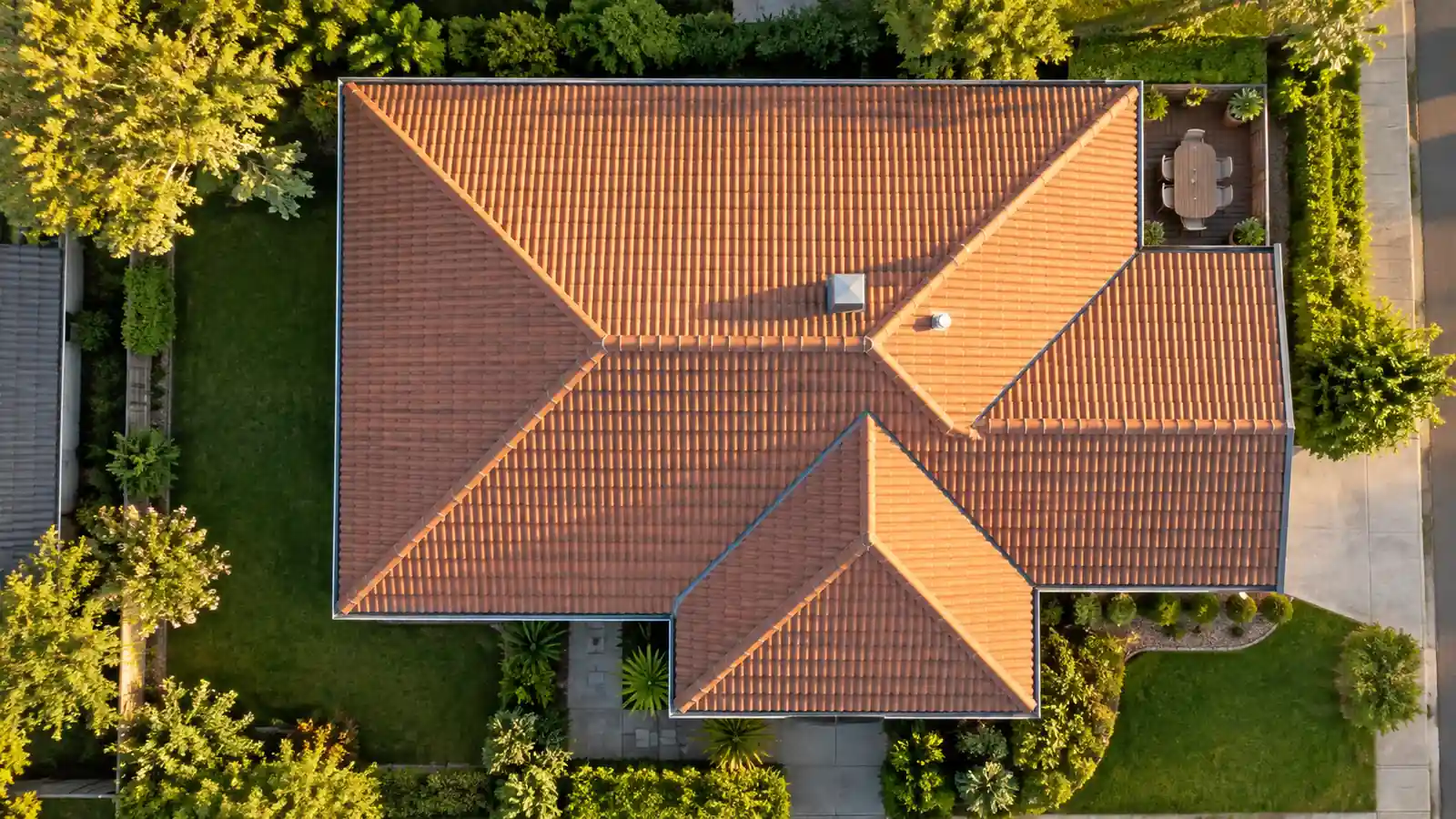
Plenty of Melbourne houses have more than one material. A tiled main roof with a Colorbond extension at the back, or a terracotta house with a polycarbonate patio, is common. Each surface gets its own method on the same visit, and the quote lists them separately so you can see what is being done where.
Not sure? Send a photo taken from the street or the backyard with your quote request. Nine times out of ten that's all we need to identify the roof.
Metal roofs
How do you clean a Colorbond roof without damaging it?
With water, a soft brush and patience. A Colorbond roof is cleaned with a low-pressure rinse and, where needed, a mild detergent worked in with soft bristles, then rinsed again. No abrasive pads, no solvents and no high-pressure tip held close to the paint.
This follows the maker's own Colorbond steel maintenance guidance, which recommends regular washing with clean, fresh water. The parts of a metal roof that rain doesn't reach, such as the underside of eaves and areas sheltered by trees, are the ones that build up dirt and salt, and those are where a wash makes the most difference.
In bayside suburbs like Hampton, Sandringham and Mentone, salt spray settles on metal roofs and gutters. Left for years, it can shorten the life of the finish. A gentle wash every year or two in those areas is cheap insurance.
We also walk metal roofs with care. Crews tread only where the sheet sits on a purlin below, wear soft-soled footwear and never drag equipment across the paint. Scratches that look minor today can become rust spots in a few winters.
Polycarbonate panels on patios and carports get the same gentle treatment. They scratch easily and can't carry a person, so they are washed from the side or from a ladder, never walked on.
Concrete tiles
Can concrete tile roofs be pressure cleaned?
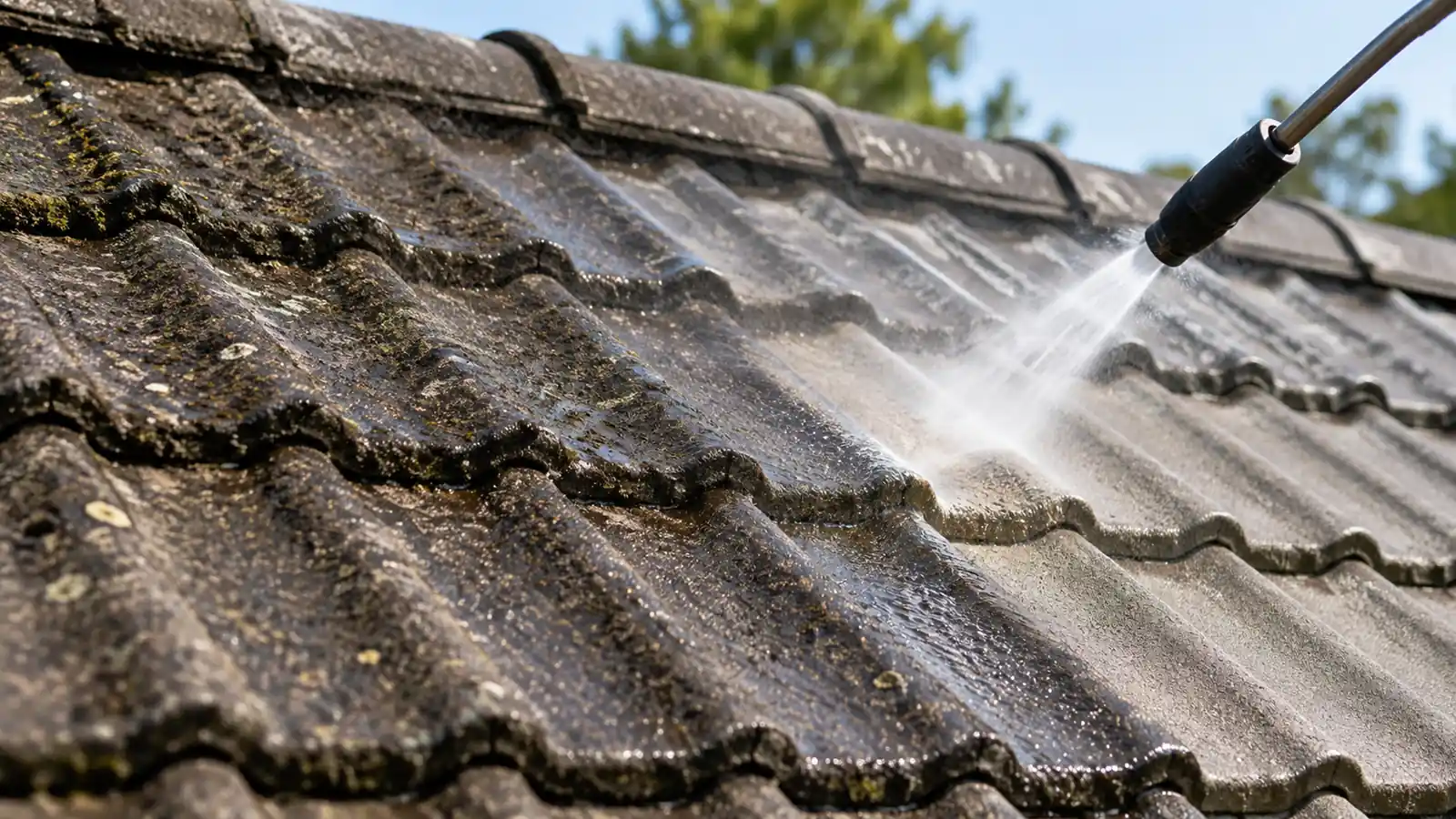
Yes, if the tiles are sound and you accept what it does. Controlled pressure removes heavy grime and lichen quickly, but it also strips any worn surface coating, so an older roof can come out two-toned and need a sealer or fresh coat before it looks uniform.
Concrete tiles are the most common roof on Melbourne houses built from the 1960s through to the 2000s, from Glen Waverley and Wantirna to Frankston and Werribee. They are tough, but they are also porous. Once the factory coating wears off, the surface holds dirt and gives lichen and moss something to grip.
When we assess one, we look at three things: whether tiles are cracked or loose, whether the ridge capping and pointing are sound, and how much of the original coating is left. Cracked tiles and loose capping rule out pressure. So does heavy coating wear if you don't want to follow up with a restoration coat.
Where pressure isn't right, a soft wash treatment kills the growth and lets rain do most of the rest over the following weeks. The roof ends up cleaner, the surface is left alone, and nothing is forced under the tiles. Our page on when roof pressure cleaning is the right choice goes into this in detail.
Terracotta and slate
Why are terracotta and slate roofs only soft washed?
Because both are brittle and both have surfaces worth keeping. High pressure can erode unglazed terracotta, chip glazed tiles and drive water under the laps, while slate cracks, splits and slips out of its nails. A soft wash cleans them without any of that risk.
Terracotta
Terracotta covers a lot of Melbourne's older housing, from Californian bungalows in Brunswick and Reservoir to Federation homes in Camberwell and Surrey Hills. Natural terracotta weathers to a soft, uneven colour that many owners love; glazed terracotta has a shiny coat that looks tired when it's covered in grime.
Either way, the method is the same. A treatment is applied at low pressure, left to work, then rinsed gently. Lichen and algae die off, and the tile surface stays intact. Crews keep off the tiles wherever possible and use the ridge line or a ladder at the eaves when they can't. Old mortar on ridges and hips is photographed if it's cracked or loose, because that's a job for a roof plumber, not for us.
Slate
Slate turns up on grand Victorian houses in Kew, Hawthorn, Brighton, Carlton and East Melbourne, and on plenty of churches and schools. A good slate roof can last a century. It can also be ruined in an afternoon by someone walking across it.
We clean slate only with a soft wash, applied and rinsed from ladders at the eaves or from a lift. Nobody walks the slates. Cracked or slipped slates, and any hanging from a rusted nail, are photographed and listed for a specialist slater to fix. If a slate roof is covered in thick moss, treatment and time do the work, not scraping.
Growth
What about moss and lichen on the roof?
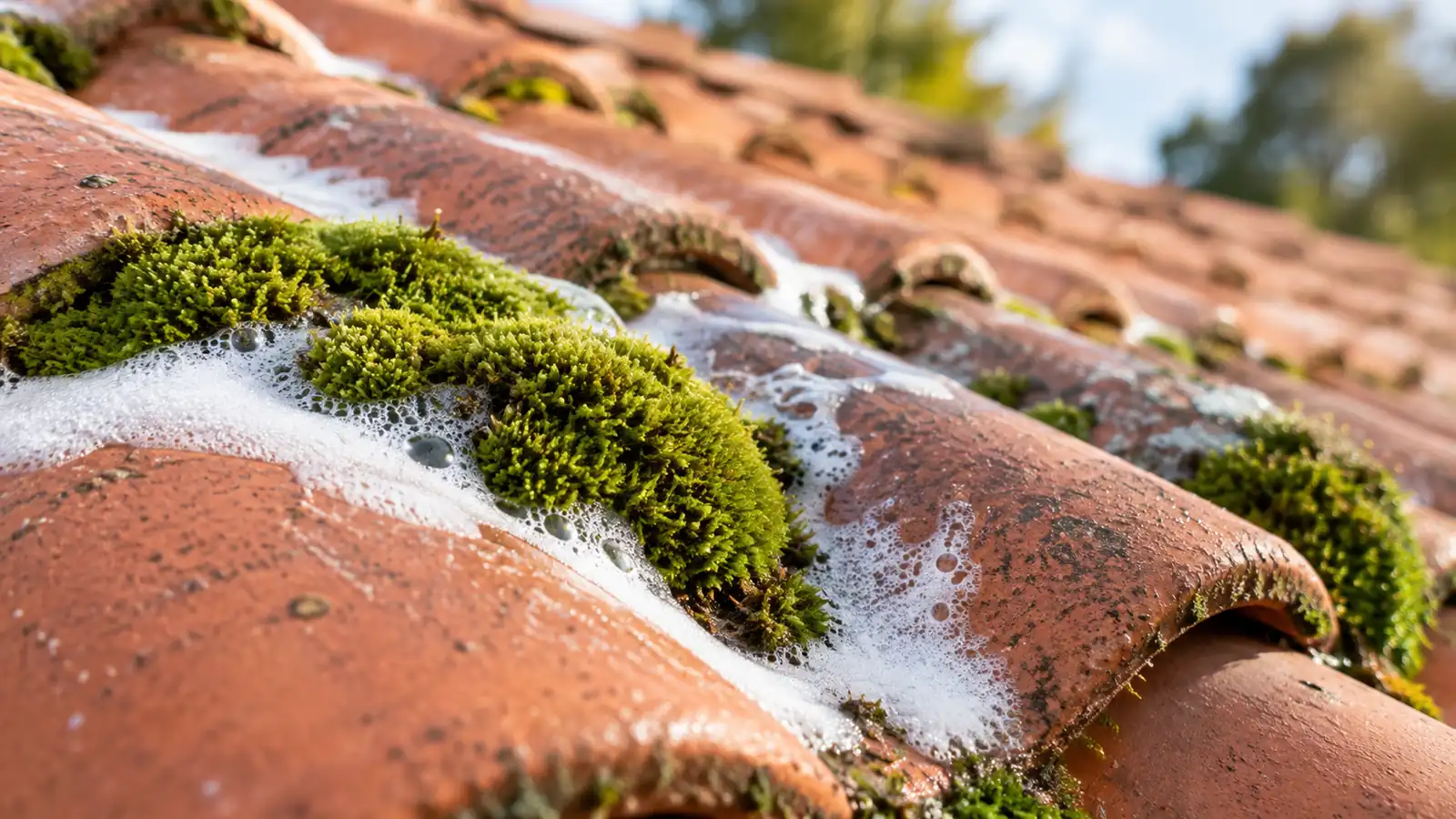
Moss and lichen are treated rather than blasted. A biocide wash kills them at the root, then they dry out and release over the following weeks as rain and wind move them on. Scraping or blasting leaves roots behind and damages the surface they're gripping.
In Melbourne they grow fastest on south-facing slopes, under overhanging trees and on the lower courses of tile that stay damp longest. Black streaks running down a roof are usually algae or lichen, while green or yellow cushions sitting in the gaps between tiles are moss.
Some owners expect a roof to look perfect the day we leave. With treated moss, it is normal for the growth to look brown and dead for a while before it drops off. The quote says that up front, along with when we'll check back.
Heavy moss sheds into gutters as it dies, which is one reason gutters are cleared as part of every roof job. For roofs where growth is the main problem, see our roof moss treatment service.
On the day
What happens on a roof cleaning day?
The crew protects what is below, confirms the roof type and condition, cleans from the top down using the agreed method, then clears the gutters and downpipes of everything that came off. You get before and after photos of each roof face and a note on any defects.
- Check and protectWindows, outdoor furniture, pools and sensitive plants near the drip line are covered or rinsed down, and any treatment is kept away from water tanks.
- Confirm the methodThe crew checks the roof against the quote: material, condition, cracked tiles or loose capping. If anything looks different, you hear about it before work starts.
- Clean top downEach face is washed from the ridge towards the gutter so dirty water isn't pushed back over cleaned sections.
- Gutters and downpipesGrit, dead growth and loosened debris are cleared from the gutters and outlets, then downpipes are flushed.
- Photos and notesBefore and after shots of each face, plus any defects worth a roof plumber's attention, sent after the job.
Houses on rainwater tanks need a little extra care. Before any treatment is applied, the downpipes feeding the tank are diverted or the first-flush is managed so wash water doesn't end up in your drinking supply. Tell us about tanks when you ask for a quote.
Timing
When is the best time of year to wash a roof?
Mid spring and mid autumn suit most roofs best. The weather is mild enough for a treatment to sit on the roof and work, dry enough for safe footing, and followed by enough rain to rinse off whatever the treatment loosens. High summer and the wettest weeks of winter are the hardest times.
A soft wash needs time on the surface. On a 35 degree day in January, treatment can dry on a dark roof before it has done its job, and the heat makes long hours on a roof unpleasant and less safe. In the middle of winter the problem flips: roofs stay wet, moss is slippery, and frequent showers can wash treatment off before it has soaked in.
| Season | Conditions on the roof | Good for |
|---|---|---|
| Spring (September to November) | Mild, growth is active, rain still frequent | Moss and lichen treatment, general washes |
| Summer (December to February) | Hot roofs, fast drying, fire season in outer areas | Metal roofs early in the day, gutters before storms |
| Autumn (March to May) | Mild and settled, leaves starting to drop | Washes followed by a gutter clean at the end of the drop |
| Winter (June to August) | Cold, damp, slow drying, short days | Booking ahead; lighter washes on sunny, still days |
If your roof is going on the market, allow a few weeks between a moss treatment and the listing photos, so the dead growth has time to fall away. A roof washed in spring usually looks its best by early summer.
Straight answer
What doesn't roof cleaning include?
Roof cleaning is not a repair, a restoration or a paint job. We don't replace tiles, repoint ridges, seal leaks or apply coatings. When the roof needs any of that, we photograph the problem and tell you which licensed trade to call, so you aren't paying a cleaner to fix a roof.
Plenty of businesses sell roof cleaning as the first step of a restoration package. There's nothing wrong with restoration when a roof needs it, but it is a different job with a different price, and it shouldn't be the automatic next step after a wash. We keep the two separate so our advice has no reason to lean one way.
That separation also matters when a roof is old. A tile roof near the end of its life may not be worth washing at all, and we will say so. Spending money on a clean a year before a re-roof rarely makes sense, and a fair quote should point that out rather than take the job anyway.
Part of a roof clean
- Washing dirt, grime, algae and lichen off the roof
- Moss treatment where it's growing
- Clearing gutters, valleys and downpipes afterwards
- Photos of every face and notes on defects
Referred to other trades
- Replacing broken tiles or slates
- Rebedding and repointing ridge capping
- Sealing, coating or painting the roof
- Leak repairs, flashings and gutter replacement
Pricing
How much is roof cleaning in Melbourne?
Roof cleaning is priced on the roof itself: its area, material, pitch, storeys and how much growth needs treating. A single storey metal roof with light grime sits at the low end; a steep, two storey terracotta roof covered in moss sits at the high end.
We measure roof area and pitch from aerial imagery, so most homes can be quoted without a visit. Material matters because it sets the method: soft washing a slate roof from a lift takes longer than rinsing a single storey Colorbond roof from the gutter line.
Two things lower the cost: booking before growth gets thick, and combining the roof with a gutter clean you'd need anyway. Two things raise it: very steep or fragile roofs that need extra access gear, and houses where a tank diversion or delicate garden adds setup time.
Water use is modest on a soft wash, since most of the cleaning is done by the treatment rather than by volume. Pressure cleaning uses more, and on a tank-fed property we plan the water supply before the day rather than draining your tank without asking.
Our pricing page covers roof and gutter cleaning prices in more detail, including how gutter-only jobs compare.
The gutter clean that follows a roof wash is included in the roof price, not added on top.
How do I get a roof cleaning quote?
Send your address and, if you can, two or three photos of the roof from the ground. We identify the material, measure the roof from aerial imagery, and reply with the method we'd use and a fixed price. Photos are the quickest way to a firm quote.
Still weighing up whether your roof should be blasted at all? Our guide should your roof be pressure cleaned? walks through the decision. Or head back to the roof and gutter cleaning home page for the full list of what we do.
Roof questions
What do owners ask about roof cleaning?
The questions owners ask most about roof cleaning are about damage: whether pressure will hurt the tiles, whether metal will scratch, and whether we fix what we find. Here is what we tell them.