
Honest advice first
Roof Pressure Cleaning: When It Works and When It Does Not
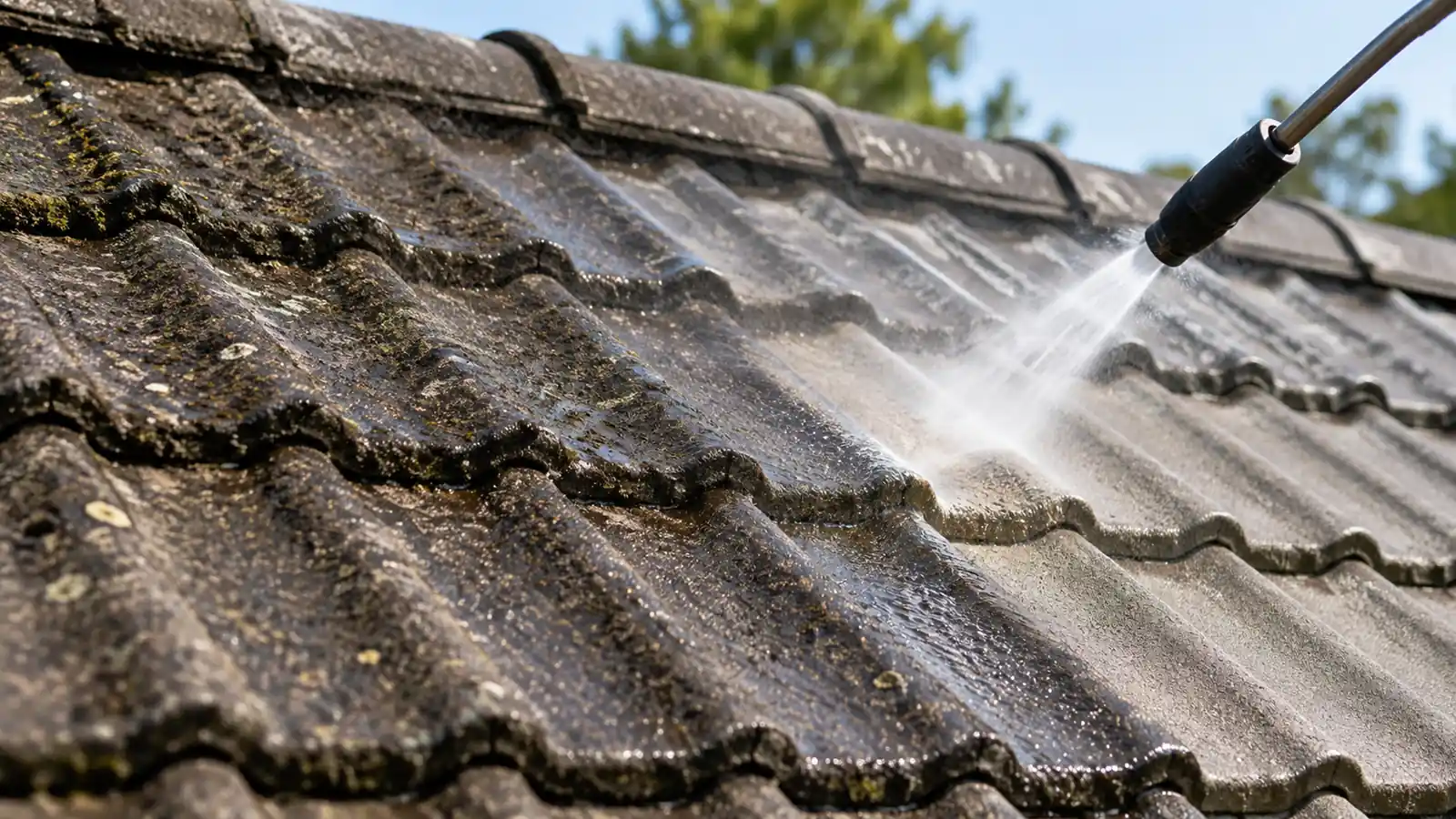
Roof pressure cleaning can make a filthy concrete tile roof look years younger in an afternoon. It can also crack terracotta, strip coatings, lift slates and push water into a ceiling. Both are true, which is why we look at the roof before anyone picks up a lance. This page explains which Melbourne roofs suit high pressure, which must never be blasted, what the gentler options are, and how we make the call. Pressure cleaning is one of several methods within our roof and gutter cleaning services, and it is not always the one we recommend.
- Inspected before any pressure
- Soft wash when blasting would harm
- Gutters cleared afterwards
The decision
Should your roof be pressure cleaned at all?
Only if three things line up: the roof is a hard material that tolerates it, the tiles or sheets are in sound condition, and you're comfortable with what roof pressure cleaning removes along with the dirt. If any of those is missing, a soft wash is the better choice.
- 1What is it made of?Concrete tiles and bare metal can take controlled pressure. Terracotta, slate, painted metal, polycarbonate and old fibro cannot.
- 2What condition is it in?Cracked or loose tiles, crumbling ridge pointing and worn flashings let pressurised water straight into the roof space.
- 3What do you want afterwards?Pressure removes the weathered surface too. If you want an even colour without a follow-up coat, a soft wash usually suits better.
Most people ask for pressure cleaning because it is the method they've seen, not because their roof needs it. A dark roof covered in black streaks is usually lichen or algae, and a treatment kills that without any force. Heavy build-up on an old concrete roof, on the other hand, may only shift with pressure. The point of an inspection is to work out which of those you have.
If you'd rather think it over first, our homeowner guide on deciding whether to pressure clean a roof sets out the same questions with more background.
Suitable roofs
Which roofs suit high pressure cleaning?
Sound concrete tile roofs are the main candidates, along with some bare, unpainted metal. Both are hard enough to take a controlled jet without breaking, and both hold the kind of stubborn, baked-on grime that a gentler wash struggles to shift.
Concrete tiles. These sit on a huge share of Melbourne homes built between the 1960s and early 2000s, from Doncaster and Mount Waverley to Narre Warren and Hoppers Crossing. After a few decades the factory finish wears off, the tile surface turns porous, and lichen, moss and dirt dig in. Controlled pressure, held at a steady distance and angle, lifts that layer and leaves a clean, sound tile.
What it also does is take the last of any worn coating with it. On a roof that still has an even colour, you may not notice. On a roof that is half faded, you will, and some owners follow a pressure clean with a sealer or coat. We tell you which camp your roof falls into before starting.
Bare metal. Unpainted galvanised or zinc-aluminium sheeting on sheds, carports and some older houses can take moderate pressure held well back, used to shift heavy grime or old lichen. It still needs care around fixings and laps.
Industrial and farm-style sheds with bare metal roofs are another good fit, especially where years of dust and bird mess have built up. The same care applies at laps and fixings, and old roofs with rust patches are cleaned more gently so thin spots aren't opened up.
Painted metal, including Colorbond, is different. Its finish is the thing protecting the steel. The manufacturer's maintenance advice for Colorbond steel is based on washing with clean fresh water, and we treat it that way: low-pressure rinse, soft brush, mild cleaner. A high-pressure tip close to the paint can scour it and invite rust.
Do not blast
Which roofs must never be blasted?
Terracotta, slate, aged or brittle tiles of any kind, painted or coated roofs, polycarbonate and anything that might contain asbestos. On these roofs the damage from high pressure costs far more than the clean is worth, so they are soft washed or left alone.
Can take controlled pressure
- Concrete tile in sound condition. Cracked tiles are replaced by a roofer first.
- Bare galvanised or zinc-aluminium sheet. Held well back, with care at laps.
- Concrete paths and driveways below. Often cleaned in the same visit if asked.
Soft wash only, or not at all
- Terracotta. Erodes the fired surface, chips glaze and forces water under laps.
- Slate. Splits, cracks and slips out of its nails. Never walked, never blasted.
- Painted metal and coated tiles. Strips the coating and can void a coating warranty.
- Polycarbonate and skylights. Scratches, clouds and can't carry weight.
- Fibro or asbestos cement. Declined outright; see below.
Houses built before the 1990s sometimes have asbestos cement sheeting on roofs, patios or eaves, and asbestos cement gutters, ridge cappings and downpipes turn up too. Victoria's asbestos information site lists these in its A to Z of asbestos-containing materials. Blasting a surface like that breaks it down and spreads fibres, so we don't pressure clean it, walk on it or disturb it. If we think a roof might be asbestos cement, we stop and tell you.
Coated roofs deserve a special mention. Many concrete tile roofs in Melbourne were restored with a membrane coating in the last twenty years, often with a warranty from the applicator. Pressure cleaning can lift that coating and may breach the warranty terms, so if your roof has been coated, dig out the paperwork before booking and we'll work to it. In most cases a low-pressure wash is what the coating supplier recommends anyway.
For the full material-by-material picture, including how terracotta and slate are washed, see our roof cleaning guide by material.
Gentler options
What are the low-pressure and no-pressure alternatives?
There are two: a soft wash, where a cleaning treatment does the work and water only rinses, and a low-pressure wash, which uses more water but no force. Either can clean a roof without pressure washing, and together they cover most roofs we see.
Soft wash
A treatment is sprayed on at garden-hose pressure, left to kill lichen, algae and moss, then rinsed gently. Much of the cleaning finishes over the following weeks as rain washes the dead growth away.
Low-pressure wash
A wide fan of water at modest pressure, often with a mild cleaner, for dirt and grime that isn't organic. Common on metal roofs and on tiles that are too fragile for more.
Controlled high pressure
A focused jet at a set distance for heavy, baked-on build-up on hard, sound surfaces. Fastest visible result, highest risk if misused, and only on roofs that pass inspection.
People sometimes worry that a soft wash is a lesser clean. It isn't; it's a slower one. On a roof that is mostly black lichen streaks, a soft wash removes the cause rather than just the surface, which is why the result often lasts longer than blasting. The trade-off is that you don't get the instant "stripe" look on the day. For thick moss specifically, our moss treatment service explains how the growth is killed and removed.
How we decide
How do we decide on inspection?
We identify the material, check its condition up close, look at the coating and what's growing on it, and ask what result you're after. Only when all of that points the same way do we recommend pressure. Otherwise the quote comes back as a soft or low-pressure wash.
| Check | What we look for | If it fails |
|---|---|---|
| Material | Concrete tile or bare metal versus clay, slate, paint or fibro | Soft or low-pressure wash |
| Tile condition | Cracks, chips, loose or slipped tiles, brittle edges | Roofer repairs first, or soft wash |
| Ridge and pointing | Cracked mortar, loose capping, gaps | No pressure near ridges; noted for a roof plumber |
| Coating | How much original finish remains, patchy fading | Discuss a soft wash or a follow-up coat |
| Growth type | Lichen and algae streaks versus thick moss versus grime | Treatment instead of force |
| Surroundings | Water tanks, ponds, delicate gardens, neighbours close by | Plan diversions and protection, or change method |
Sometimes the honest answer is that a roof shouldn't be cleaned at all. A tile roof with widespread cracking, or one due for replacement in the next year or two, gains very little from a wash and can be harmed by one. In that case we say so, suggest a roofer takes a look, and leave it there. A clean that makes a failing roof look good for a sale without fixing anything is not a job we take on.
For most houses we start from aerial imagery and your photos, then confirm on the day before the first face is touched. If the roof turns out different from what we expected, you hear about it before work starts, not afterwards.
Water and waste
Where does the water and grime go?
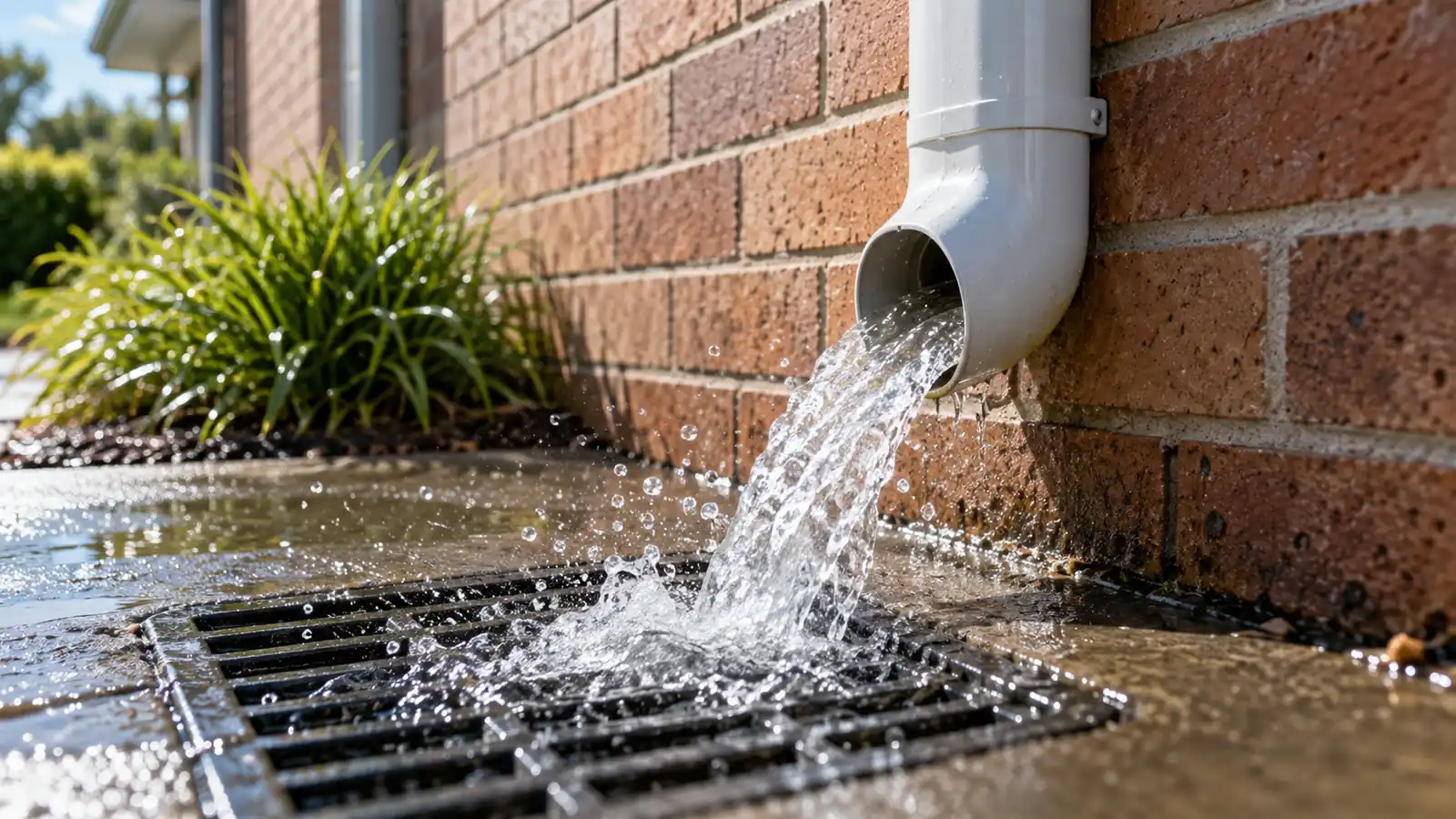
Into the gutters, not into the street. Pressure cleaning loosens a surprising amount of grit, dead growth and old coating, and all of it heads downhill. Gutters and outlets are cleared once the roof is done, downpipes flushed, and solids bagged and taken away.
What goes down a stormwater drain in Melbourne ends up in creeks and the bay without treatment. EPA Victoria lists detergents, sediment and material worn off roofs among the main sources of stormwater pollution, and anyone whose work could affect stormwater has a general duty to reduce that harm. In practice that means catching solids in the gutters rather than hosing them into the street, using cleaners sparingly, and not rinsing slurry off driveways into the drain.
Neighbours matter as well. On tight blocks in the inner suburbs, spray and drips can reach the house next door, so we work with the wind, lower the pressure near boundaries and let neighbours know before starting if their car or washing is in the way.
Homes on rainwater tanks need a plan too. The downpipes feeding the tank are disconnected or diverted before any work, then reconnected once the roof and gutters have been flushed clean.
What goes wrong
What damage does a bad pressure cleaning job leave?
The common damage is quiet at first: tile surfaces stripped back to raw concrete, glaze chipped off clay tiles, mortar blown out of ridges, and water driven under the laps into insulation and ceilings. Most of it only shows up with the next heavy rain or the next few winters.
| What happened | The cause | When you find out |
|---|---|---|
| Raw, sandy tile surface | Jet held too close on worn concrete tiles | A year or two later, as moss returns faster |
| Pitted or chipped terracotta | High pressure on clay tiles | Straight away, if you look closely |
| Ceiling stains after the clean | Water forced up under laps or through cracked tiles | The next storm |
| Loose ridge capping | Old mortar blasted out of the joints | When capping moves in wind or leaks |
| Rust spots on metal | Paint scoured at fixings and laps | Months later |
| Blocked gutters and downpipes | Slurry and grit left in the gutters | The first real downpour |
We are sometimes called in after one of these jobs to clear gutters full of blasted grit, and the pattern is usually the same: a cheap door-knock quote, a quick blast, no gutter clean and no photos. A roof that has been over-blasted can't be undone by cleaning, which is the whole reason for inspecting first.
The visit
What does a pressure cleaning visit look like?
It runs in a fixed order: set up safety and protection, confirm the roof matches the quote, pre-treat the growth, clean each face from the top down in overlapping passes, clear the gutters of everything that came off, then photograph the result. Most homes are finished in a single day.
- Set upAnchor points or ladders are secured, windows and outdoor furniture are protected, tank downpipes are diverted and the area below is kept clear.
- Confirm the roofThe crew checks material and condition against the quote. Anything cracked or loose near the work area is photographed and pointed out.
- Pre-treatLichen and moss are treated first, so the growth releases more easily and less force is needed.
- Clean top downEach face is cleaned from the ridge towards the gutter, keeping the jet at a steady distance and angle, and working with the tile laps rather than into them.
- Gutters and outletsGrit, slurry and loosened growth are cleared from the gutters and valleys, downpipes are flushed and solids bagged.
- PhotosEach roof face is shot as found and again once finished, and any fault spotted on the way is added with its location.
The weather matters. We don't pressure clean in strong wind, because spray drifts onto neighbours and footing gets worse, and we avoid the hottest part of summer days on dark roofs. If conditions turn on the day, the job moves and the price doesn't.
Pricing
What does roof pressure cleaning cost?
It is priced on roof area, pitch, storeys, the amount of build-up and the protection needed around the house. A single storey concrete roof with open access sits at the lower end; a steep two storey roof with tanks, ponds and close neighbours costs more to set up and clean.
Roof area and pitch come from aerial imagery, which is why most quotes can be done without a visit. Build-up matters because heavy lichen takes longer to clear evenly than light grime. Storeys and pitch matter because they change how the crew is secured on the roof.
Clearing the gutters and downpipes afterwards is part of the same price. It isn't optional, because the roof's debris ends up there either way.
A soft wash is often similar in cost to pressure cleaning on the same roof. Less time is spent with the lance, but treatment and a return check are added. So the choice between them should be about what suits the roof, not about saving money.
Sealing or recoating after a pressure clean is a separate job for a roof restorer and isn't included. For how pressure work compares with other jobs, see what roof and gutter cleaning costs in Melbourne.
How do I book an inspection and clean?
Send your address and a few photos of the roof, including any close-ups of damaged tiles or ridges. From those we work out the roof type and size, then send back a written price naming the cleaning method. If pressure isn't right for your roof, the quote explains why and offers the alternative.
Looking after gutters as well as the roof? Start from the roof and gutter cleaning main page to see how the two fit together.
Pressure questions
What do people ask about pressure cleaning roofs?
Before booking, most people want to know whether their tiles will crack, whether a metal roof can be washed this way, and what a soft wash actually involves. These are the answers we give by email and on site.