
Roof care guide
Should Your Roof Be Pressure Cleaned?
This guide is for owners who've been offered a roof blast, or are thinking of hiring a pressure washer and doing it themselves. The short answer: only some roofs should be pressure cleaned, and knowing how to pressure clean a roof matters less than knowing whether yours can take it. Sound concrete tiles usually can. Terracotta, slate, painted or coated roofs and anything fragile usually can't, and a soft wash does the job instead. You'll find related reading in our roof and gutter care guides.
The decision
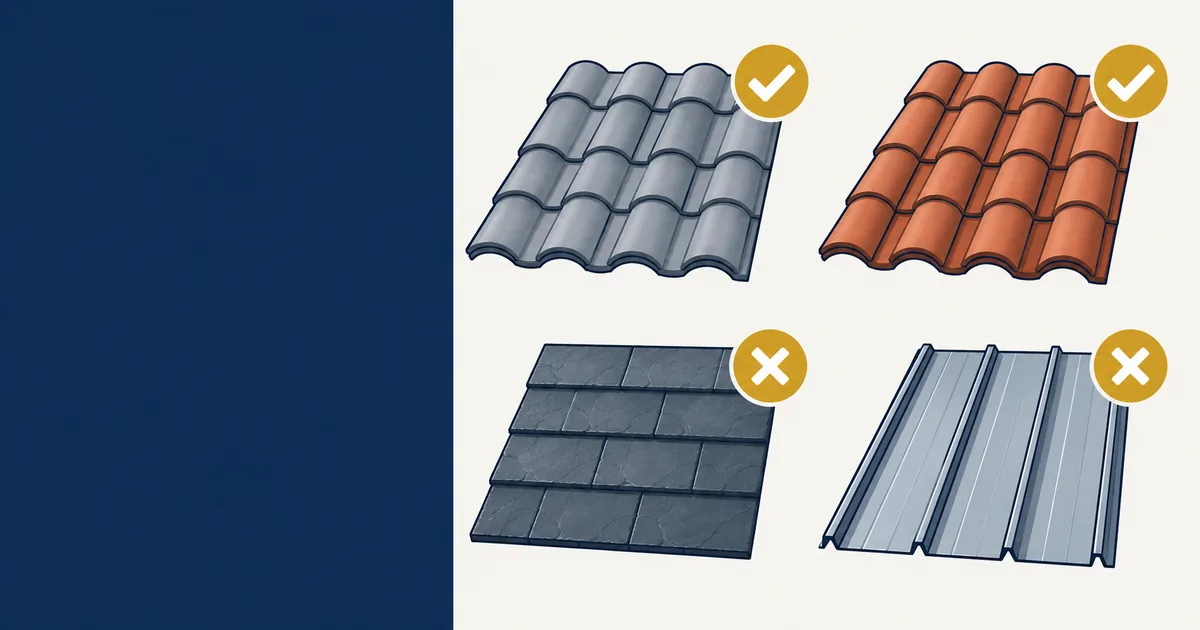
Which roofs can be pressure cleaned, material by material?
Before you work out how to pressure clean a roof, check what it's made of and what state it's in. Sound concrete tiles and some bare metal can take a controlled jet. Worn tiles need a gentler wash. Terracotta, slate, coated roofs, polycarbonate and possible asbestos should never be blasted.
Condition matters as much as material. A thirty-year-old concrete roof with a worn, porous surface is a very different proposition from the same tile at ten years old. If you can rub grit off a tile with your thumb, it has lost most of its surface and high pressure will take more of it away.
Damage honesty
What does high pressure do to the wrong roof?
It strips surfaces that can't be put back. On terracotta it can chip the glaze and fire skin. On slate it splits layers and lifts slates. On painted roofs it peels coating. On old tiles it erodes the surface and drives water under the laps, straight into the roof space.
| Roof | What a jet can do | Safer method |
|---|---|---|
| Terracotta | Chips glaze and the fired outer skin | Soft wash, or treat and wait |
| Slate | Flakes the face, shifts slates on their nails | Treat and let rain clear it |
| Coated or painted | Lifts film wherever it's already weak | Soft wash within the coating's care terms |
| Worn concrete | Erodes the surface, pushes water under laps | Soft wash, low-pressure rinse |
| Fibre cement | May release asbestos fibres | Test first; no cleaning until cleared |
Terracotta. Clay tiles have a hard outer skin from firing, and glazed tiles have a glass-like coat on top. A narrow jet close to the surface can chip both. Once the skin is gone, the clay underneath soaks up water, grows moss faster and weathers quicker.
Slate. Natural slate is made of thin layers. Water under pressure can find its way between them and flake the face off, and the force can push slates out of position on their nails. Slate lasts a very long time when left alone, and not very long when blasted.
Painted and coated roofs. A roof that has been restored and coated has a film on it that pressure will lift wherever it's already weak. You end up with a patchy roof that needs recoating sooner than planned.
Water in the roof space. Tiles overlap to shed rain falling from above. A jet aimed up the roof pushes water under those laps and onto the sarking or ceiling below. Ceiling stains a day after a clean usually mean exactly that.
The gentler option
What is soft washing, and when is it better?
Soft washing uses a cleaning solution, applied at low pressure, to break down moss, lichen, algae and grime, followed by a gentle rinse. The chemistry does the work instead of the force, so it suits nearly every roof, including the ones that should never be blasted.
The trade-off is time. A pressure wash shows its result the moment the water hits. A soft wash often looks only partly done on the day, because lichen and algae keep fading over the following weeks as the treatment keeps working and the rain rinses them away. Owners who expect an instant change can be disappointed at first and pleased a month later.
Soft washing also tends to last longer. Pressure removes growth down to the surface but can leave spores in the pores of the tile. A treatment reaches those too, which slows regrowth. On Melbourne's shaded south faces, that difference shows within a year or two.
The runoff needs care either way. Downpipes to rainwater tanks should be disconnected first, garden beds wetted and covered, and gutters cleaned afterwards so the dead growth and rinse water don't sit and block them.
Paperwork first
Can pressure cleaning affect a roof warranty or coating?
It can. Roofing and coating warranties commonly come with care conditions, and some set out how the roof should be cleaned. Before anyone uses pressure on a coated or relatively new roof, find the paperwork from the manufacturer or the restorer and check what it says.
For painted steel, the maker's Colorbond steel maintenance advice is built around washing with clean fresh water and avoiding harsh abrasive methods. That's a sensible rule for any painted metal roof, whatever the brand. If a roof was restored and coated, the restorer's warranty will usually say how it should be cared for, and a roof blast may not fit those terms.
There's one more check for older homes. Some fibre cement roofing, often on houses, sheds and garages built before the 1990s, contains asbestos. The Victorian Government's A to Z guide to asbestos-containing materials lists roof sheeting among them. Water blasting it can release fibres, so it should be tested before any cleaning is discussed.
Doing it yourself
Should you pressure wash your own roof?
No, for two reasons. A pressure washer on a wet roof is one of the easiest ways to fall, because the spray makes tiles slick and the lance pushes back against you. And without experience, it's very easy to damage tiles, force water inside or strip a coating.
Hire pressure washers are built for driveways, where the surface is flat and you're standing on the ground. On a pitched roof, you're standing on the thing you're cleaning, often wet, often mossy, with a hose pulling at you and a gutter line close behind. WorkSafe Victoria's compliance code for preventing falls sets out the controls professionals use for roof work, and very few of them are practical for a weekend DIY job.
What you can do safely is keep the roof in better shape from the ground: trim branches that shade the roof, keep gutters clear, and treat early growth with a sprayer from a stable position. Our guide to cleaning gutters safely and knowing when to stop goes through the ground-level options.
Choosing a cleaner
How do you get a roof cleaned the right way?
Choose someone who looks before deciding. A good roof cleaner identifies the material, checks tile condition, ridge pointing and any coating, then tells you which method suits and why. If a quote says "pressure clean" without mentioning your roof type, ask more questions.
Useful questions to ask: what pressure and nozzle will you use on my roof, and why? How will you protect the tank, the garden and the inside of the roof? Will you clean the gutters afterwards? What happens if you find cracked tiles? Good operators answer easily. Vague answers are a warning.
Our roof pressure cleaning service starts with that inspection, and only uses pressure where the roof can take it. Where it can't, we soft wash, and for roofs that are mostly moss, our roof moss removal service uses the slower treat-and-wait method instead.
Not sure which method your roof needs?
Send a few photos of the roof taken from the street or yard, along with your address. We'll identify the material from aerial imagery, tell you whether it suits pressure, a soft wash or neither, and quote a fixed price for the right method.
Quick answers
What else do owners ask about roof washing?
Two questions follow almost every conversation about roof washing: whether a hired machine is good enough, and whether the gentler method really gets a roof clean.