
Treat, remove, prevent
Roof Moss Removal: Treat, Remove, Prevent
If you want to remove moss off a roof without damaging it, the order matters: kill it first, let it let go, then clear what's left. Our roof moss removal in Melbourne follows that order on tile, terracotta, slate and metal roofs, and finishes with a gutter clean, because dead moss always ends up in the gutters. This page covers why moss grows where it does, why scraping and blasting cause more trouble than they solve, how each roof type is treated, and what you can do to slow it coming back. It is part of our wider roof and gutter cleaning services.
- Killed at the root, not scraped
- Safe for slate and terracotta
- Gutters cleared as part of the job
The method
How does professional roof moss removal work?
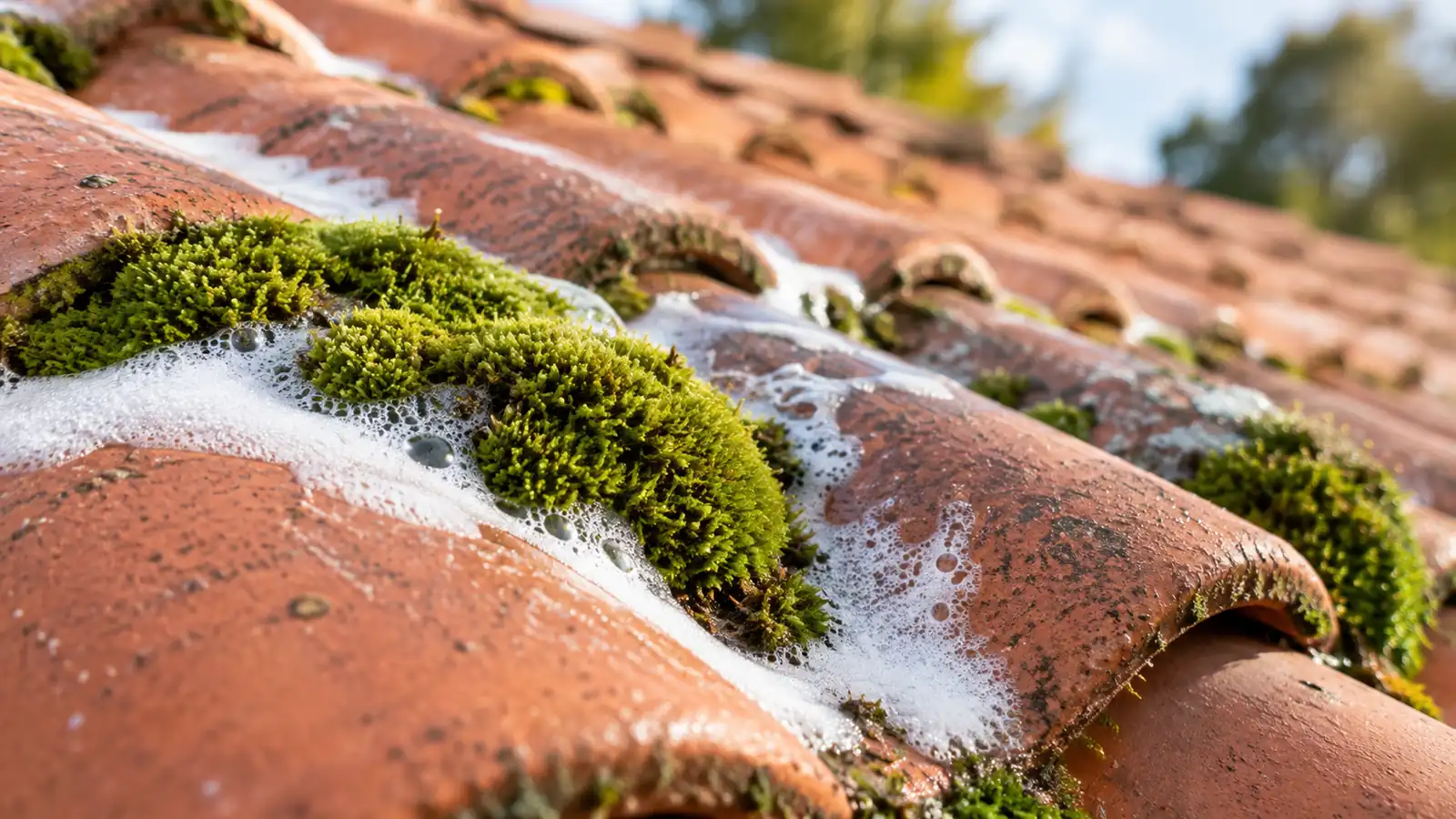
Professional roof moss removal treats first and removes second. A biocide is applied to the growth, left to soak into the root system, and the moss dies over the following days. Once it has dried and loosened, what hasn't already dropped is brushed or rinsed off gently, and the gutters are cleared.
- TreatThe whole affected area is sprayed at low pressure, including the thin film of growth you can't yet see around each cushion. That is what stops it coming straight back.Day one
- DwellThe treatment works into the moss and the tile surface. Over the next days and weeks the growth turns brown, dries and loses its grip on the tile.Days to weeks
- RemoveLoose dead moss is brushed or rinsed away at low pressure, the gutters and valleys are cleared of what has fallen, and the roof is photographed again.Same visit or return check
How long the middle step takes depends on the weather and how thick the growth is. Light moss can be cleared on the same visit; thick cushions on a shaded roof may need a few weeks of rain and wind to finish releasing. The quote tells you which to expect, and where a return visit is needed to clear the last of it, that's included in the price.
The treatment is applied to the label directions, kept off windows and away from ponds and tanks, and the area below is rinsed down afterwards. Plants directly under the drip line are wetted before and after, which dilutes any overspray.
What not to do
Why do scraping and blasting moss fail?
Because they remove what you can see and leave what you can't. Moss anchors itself with fine root-like threads that reach into the tile surface and the gaps between tiles. Scrape or blast the top off and those threads stay, so the growth is back within a season or two, often on a rougher surface.
Scraping has a second problem: it means walking the roof. A person on old terracotta or slate, leaning on a scraper, cracks tiles almost every time. Each crack becomes a new place for water to get in and moss to settle.
Blasting has a third problem: it drives water and moss fragments up under the tile laps and into the roof space, and it strips the surface of concrete tiles, leaving them more porous. A more porous tile holds more moisture, which suits moss perfectly. It is a common reason owners find their roof greener two years after a pressure clean than it was before.
There is a place for controlled pressure on some concrete roofs, and we explain when on our roof pressure cleaning page. For moss on its own, though, treatment beats force almost every time.
By roof type
How is moss removed from different roof materials?
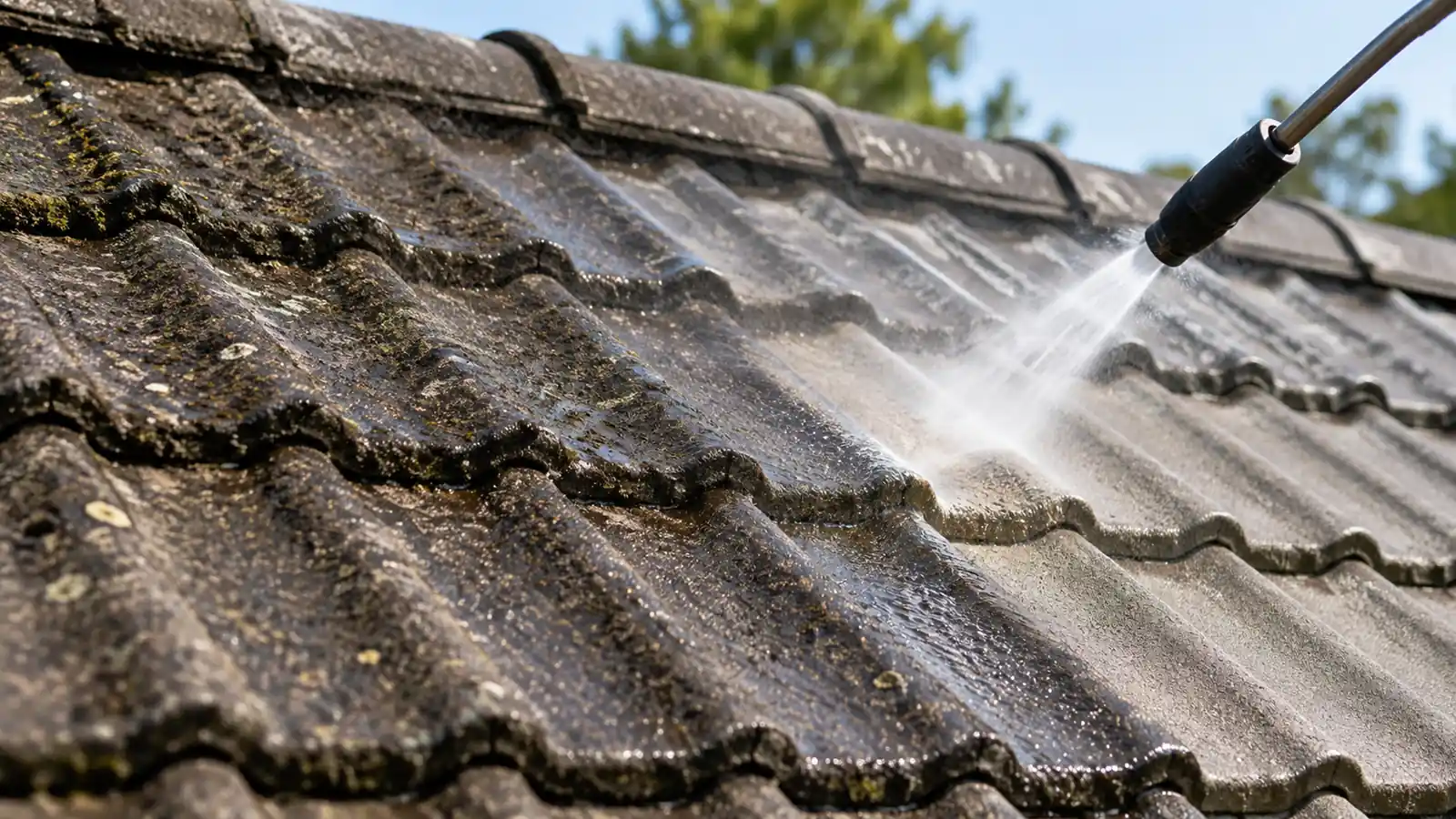
Every roof gets the same treat-first approach; what changes is how the dead moss is cleared and how much foot traffic the roof can take. Concrete tiles are the most forgiving, terracotta needs a lighter touch, slate is never walked, and metal rarely grows moss at all.
| Roof | How moss behaves | Removal once treated | Walked? |
|---|---|---|---|
| Concrete tile | Grows in cushions along the lower edges and in the gaps between tiles | Brush and low-pressure rinse | Carefully, low on the tile |
| Terracotta | Spreads over natural, unglazed clay; roots into mortar at ridges | Gentle rinse, left to weather off | As little as possible |
| Slate | Collects at the tails and lifts slates as it thickens | Rinse from ladders or a lift only | Never |
| Colorbond and metal | Rare; mostly lichen and algae in shaded pans | Soft brush and rinse | Along supported lines only |
Slate roofs deserve extra care. Moss holding water at the bottom edge of each slate keeps the nails and battens wet, and heavy growth can lift slates enough to let wind get under them. On the big Victorian houses of Kew, Hawthorn and Brighton, that is how a small moss problem becomes a slater's bill. Treatment and patience are the only safe way to clear it.
Ridge capping is another weak spot. On older tile roofs the mortar under the capping is where moss often starts, and its roots can widen cracks in the pointing. We treat it the same as the rest of the roof, then photograph any mortar that is cracked or loose so a roof plumber can repoint it. For more on the wider cleaning side of each material, see our guide to roof cleaning by material.
Know what you have
Is it moss, lichen or algae on your roof?
Moss is soft, green and raised, growing in cushions. Lichen is flat, crusty and grey, pale green or yellow, stuck tight to the tile. Algae shows up as dark streaks running down the roof. All three are treated similarly, but they look different afterwards and come back at different speeds.
Moss
Green to yellow-brown cushions that hold water like a sponge. Heaviest on shaded faces and along tile edges. Falls away in clumps once dead.
Looks worst before it looks better
Lichen
Flat, round patches in grey, cream or pale green, fixed firmly to the tile. Grows slowly and survives dry weather. Fades and flakes off over weeks.
The slowest to disappear
Algae
Black or dark green streaks running down from the ridge, often on lighter roofs. Mostly cosmetic, but a sign the roof stays damp.
Usually the quickest to clear
Many Melbourne roofs carry all three at once: algae streaks on the open faces, lichen spots dotted across the tiles and moss where the roof stays wettest. The treatment targets all of them in the same visit, so you don't need to know exactly which you have before asking for a quote. A couple of photos help us judge how thick the growth is and whether a return visit is likely.
One quick test you can do from a ladder at the gutter line: press the growth with a gloved finger. Moss feels spongy and often squeezes out water; lichen feels like a dry, crusty stain that won't budge; algae leaves a dark smear. Please don't go further up the roof than that to find out.
Local conditions
Why do Melbourne roofs grow so much moss?
Moss needs shade, moisture and a surface to grip, and plenty of Melbourne roofs offer all three. Rain falls on around a hundred days a year, south-facing slopes get little winter sun, big garden trees keep roofs shaded and damp, and old porous tiles hold water long after a shower.
The Bureau of Meteorology's long-term Melbourne averages show rain on about 100 days a year, with the wettest stretch running from autumn into spring. That pattern matters more than the total. Frequent light rain keeps a shaded roof damp for months at a time, and damp is what moss needs to take hold.
Aspect is the biggest single factor. In the southern hemisphere, south-facing roof slopes get the least sun, so they stay wet longest after rain. It's common to see a roof that is clean on its north side and green on its south side.
Trees add to it. Overhanging branches shade the roof, drop leaves that hold moisture against the tiles, and feed the gutters with debris that keeps the lower courses wet when water backs up. Homes in the leafy east and in the Dandenong foothills see this more than most.
Finally, the roof itself. Older concrete tiles that have lost their coating, and unglazed terracotta, are porous. They soak up water and give moss roots plenty of texture to hold on to. Smooth, sunny metal roofs, by contrast, rarely grow moss at all.
Prevention
How do you keep moss from coming back?
You can't make a shaded Melbourne roof moss-proof, but you can slow it down a lot. Let more sun and air onto the roof, keep gutters flowing so water doesn't sit on the lower tiles, and treat early when you first see green rather than waiting for thick cushions.
- Trim overhanging branchesMore sun and airflow means faster drying after rain. Even thinning a canopy makes a visible difference within a year.
- Keep the gutters clearWhen gutters back up, the bottom row of tiles stays wet. That row is usually where moss starts.
- Treat light growth earlyA light treatment on the first patches is quicker and cheaper than clearing a roof that has gone fully green.
- Consider zinc or copper stripsMetal strips fixed along the ridge release traces that discourage growth on the tiles below them. They help most on smaller roof faces; results vary on wide, shaded ones.
Sealing concrete tiles after a clean also slows regrowth, because a sealed tile holds less water. That is a job for a roof restorer rather than us, and it's worth weighing up if your roof has lost most of its original finish. As a guide, a treated roof with the gutters kept clear usually stays clear for several years; a roof under heavy tree cover will need a lighter touch-up sooner.
Selling or leasing
Should you treat roof moss before selling or leasing a house?
Often, yes, as long as you book it early enough. A green roof is one of the first things buyers and building inspectors notice, and a treated roof needs a few weeks to finish shedding dead growth. Book at least four to six weeks before listing photos or the first open inspection.
Pre-purchase building inspectors usually note moss and lichen, and a report that mentions heavy growth invites questions about the tiles and gutters underneath. Treating it beforehand, and keeping the photo report from the job, gives you something to show a buyer who asks.
What treatment won't do is hide a problem. If the moss has lifted tiles or slates, or the ridge pointing is failing, those show up in our photos too, and they're better fixed by a roofer before an inspector finds them.
For landlords, moss is mostly a maintenance question. Overflowing gutters and damp lower tiles lead to leaks and tenant calls. Treating the roof and clearing the gutters in the same visit, then repeating the gutter clean each year, keeps both under control.
If time is short before a sale, tell us the listing date. We'll say honestly whether the roof will look its best by then, or whether a gutter clean alone is the better use of the budget.
Bigger roofs
Do you treat moss on strata and commercial roofs?
Yes. Townhouse rows, apartment blocks, churches, schools and older commercial buildings get the same treat-first method, planned around residents or trading hours. The main differences are access, which may need anchors or a lift, and the paperwork, such as a safe work method statement and insurance certificates.
On strata sites, moss tends to be worst on the shaded side of a townhouse row, where one owner's roof face stays wet while the neighbour's dries. Because the roof is usually common property, the owners corporation decides, and we quote the whole affected area rather than one lot at a time. Committees get before and after photos per building so the work can be tabled and recorded.
On older commercial and community buildings, especially churches and halls with slate or terracotta, the priority is protecting the roof. Treatment and patience are used instead of anything that needs people walking on fragile slates, and any lifted or broken pieces are recorded for a specialist.
Doing it yourself
Can you remove roof moss yourself?
On a low, single storey roof with light growth, some owners do. Moss killers are sold at hardware stores, and applied from a ladder to the label, they can work. The risks are the roof itself, the height and the chemical near gardens, pets and rainwater tanks.
If you try it, stay off the tiles, work from a properly footed ladder at the gutter line, read the label twice, and keep treatment well away from tanks and fish ponds. Don't scrape and don't pressure wash, for the reasons above. Our full guide on how to remove moss from a roof goes step by step, including the jobs to leave to someone with anchors and a harness.
Where DIY usually stops making sense: any double storey roof, any slate or old terracotta, any roof you'd have to walk on to reach the moss, and any roof where the growth has already lifted tiles or slates. In those cases the cost of a fall or a cracked roof dwarfs the cost of a treatment.
Pricing
What does moss removal from a roof cost?
The price depends on how much of the roof is affected, how thick the growth is, the roof material, the pitch and the number of storeys. A light treatment on one shaded face of a single storey house sits at the low end; a fully green two storey slate roof sits at the high end.
Most quotes are done from aerial imagery plus two or three photos from the ground, which show us where the growth is and how heavy it looks. Treating only the affected faces, rather than the whole roof, is often possible and keeps the cost down.
The gutter clean that follows is included, since dead moss ends up in the gutters either way, and so is any return visit the quote says is needed.
Metal roofs with lichen in the pans are usually the quickest and cheapest to treat, because the growth is thin and the roof can be reached safely.
Adding moss treatment to a gutter clean you were booking anyway saves a second setup. So does treating in spring or autumn, when the treatment works fastest and fewer return trips are needed.
For how moss treatment compares with washing and gutter work, see our page on roof and gutter cleaning costs.
How do I book a moss treatment?
Request a quote with your address and a few photos showing where the moss is. We confirm the roof type and pitch from aerial imagery, tell you whether it can be cleared in one visit or needs a return check, and send a fixed price covering treatment, removal and gutters.
Want to see everything else we do on roofs and gutters? Visit the Roof Gutter Cleaning Melbourne home page.
Moss questions
What do owners ask about roof moss?
The three things owners most want to know are whether moss is actually hurting the roof, whether the treatment is safe for the garden, and how long it will be before they see green again. Short answers below.